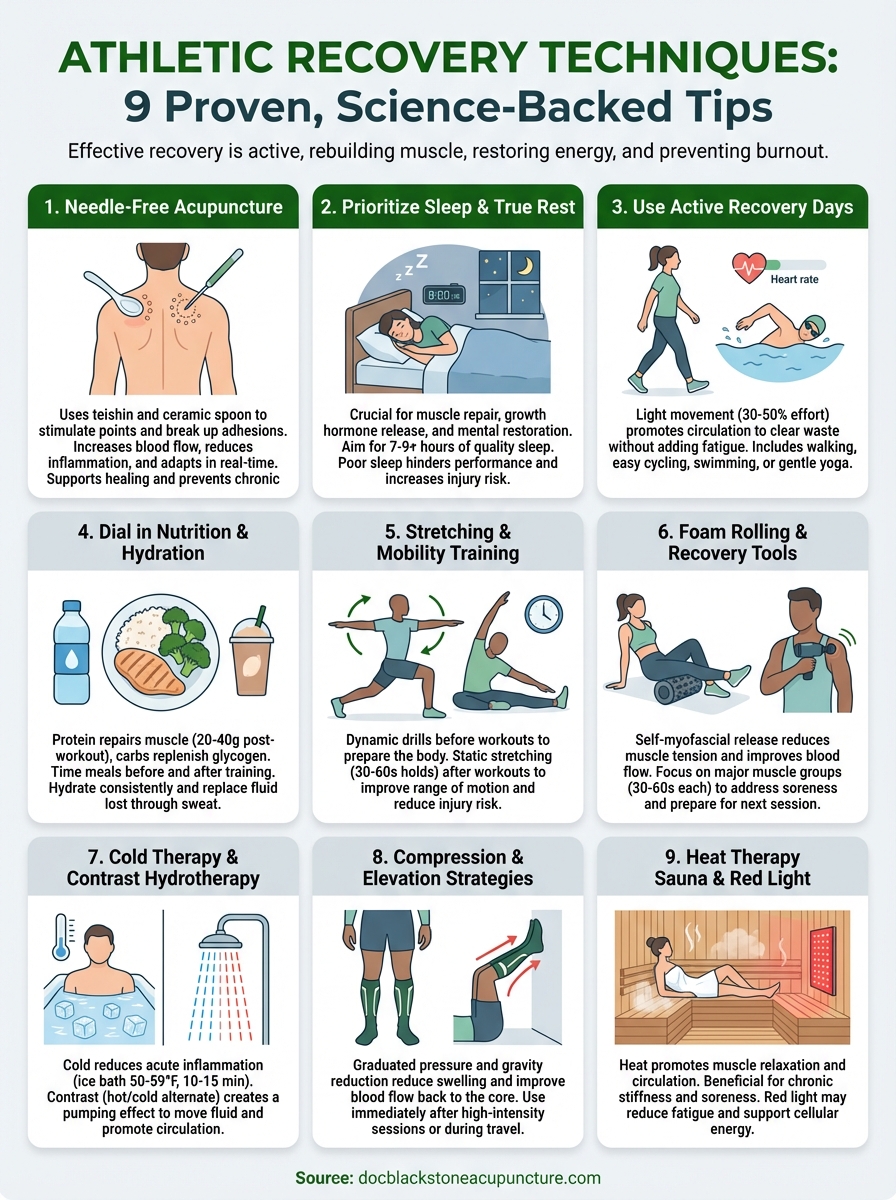
You train hard and push your limits. But without proper recovery, your performance stalls, soreness lingers, and injury risk climbs. Most athletes focus on training volume and intensity while treating recovery as an afterthought. That approach leaves gains on the table and sets you up for burnout. The truth is effective athletic recovery techniques separate athletes who plateau from those who keep improving. Recovery is not passive rest. It is an active process that rebuilds muscle, restores energy, and prepares your body for the next challenge.
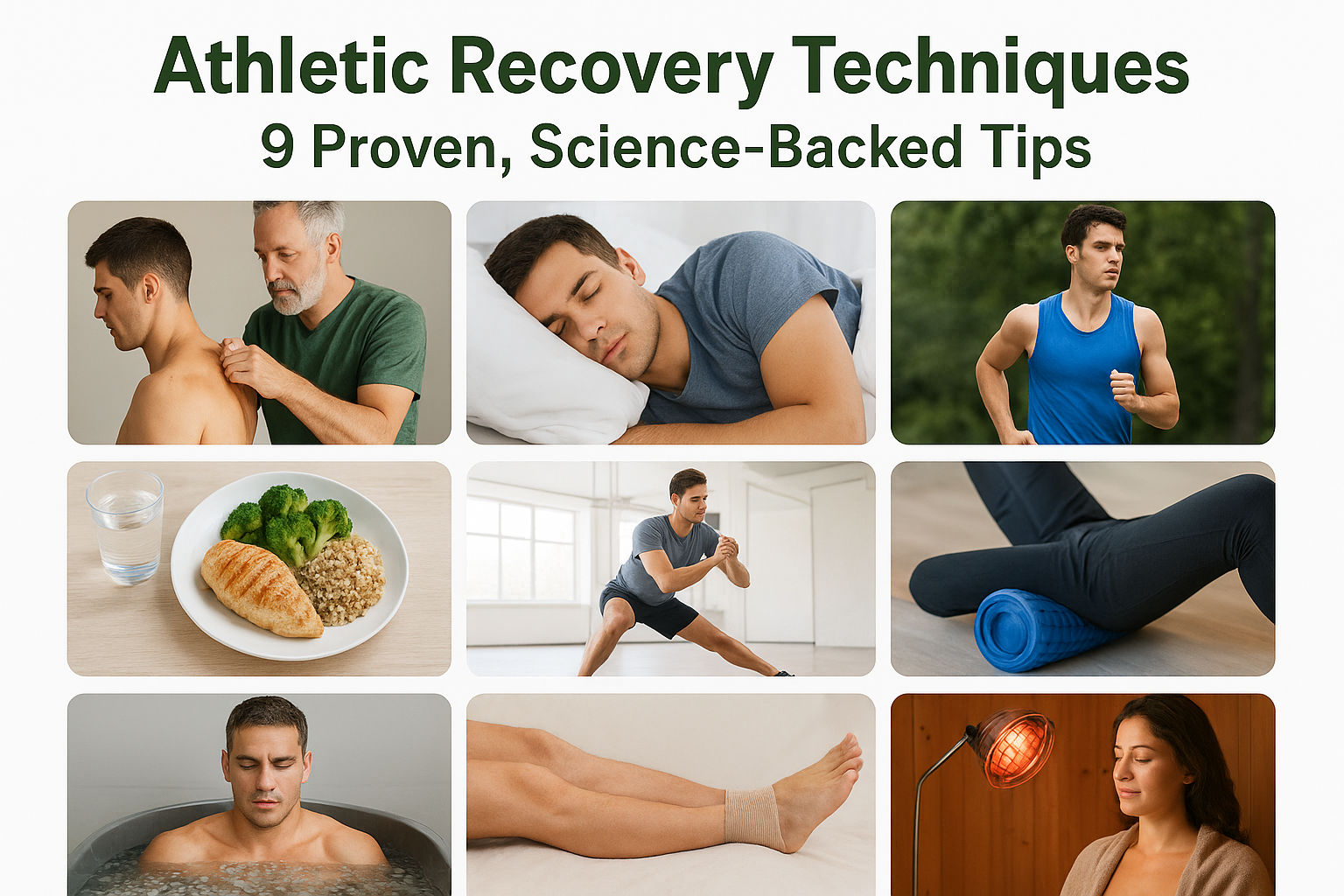
This article walks you through nine proven recovery techniques backed by science and clinical experience. You will learn how needle free acupuncture accelerates healing, why sleep quality matters more than you think, and how to use active recovery without sabotaging progress. We cover nutrition timing, mobility work, foam rolling, cold therapy, compression, and heat therapy. Each technique includes practical steps you can start using immediately. Whether you are a weekend warrior or an elite competitor, these strategies will help you recover faster, reduce soreness, and perform at your best.
1. Needle free acupuncture for athletic recovery
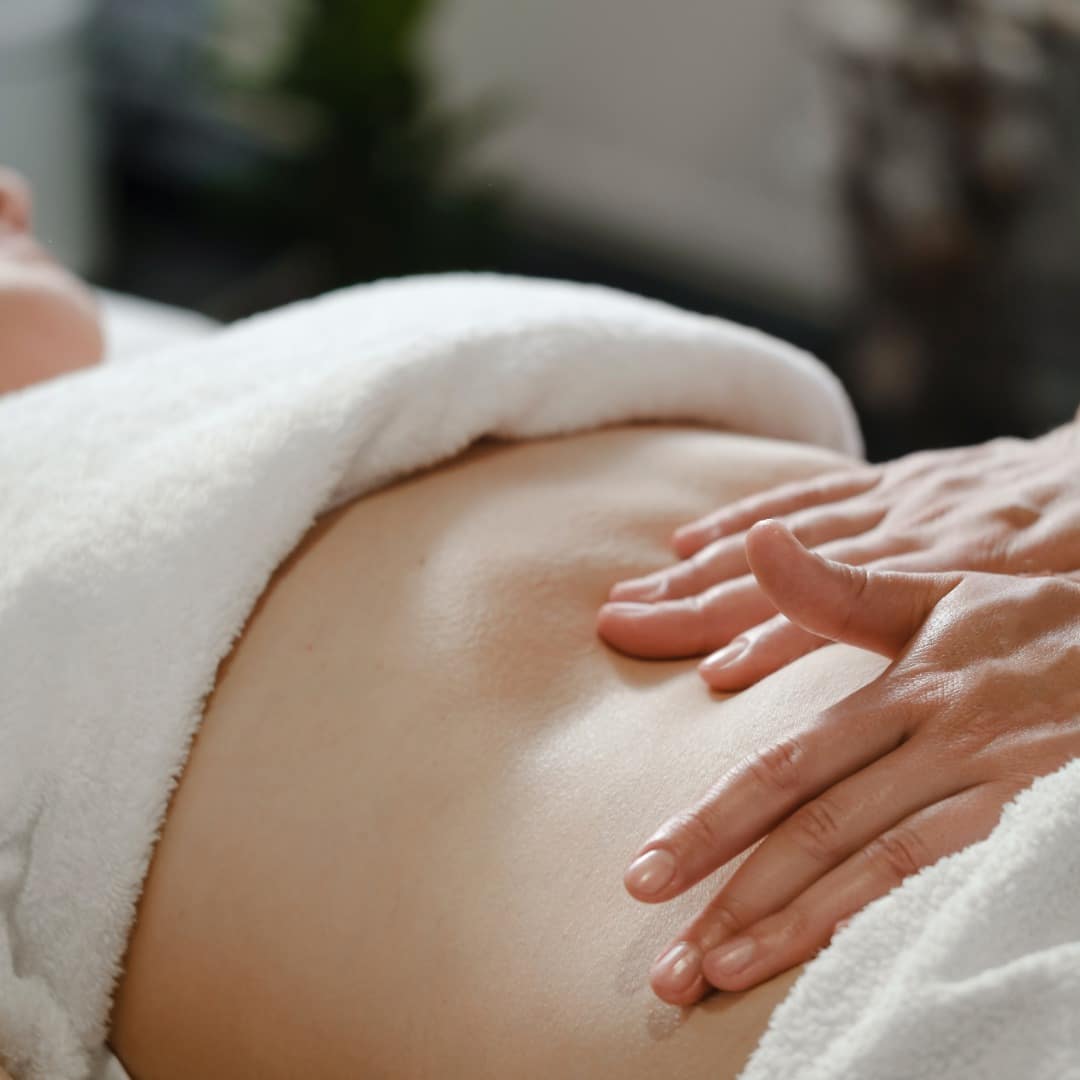
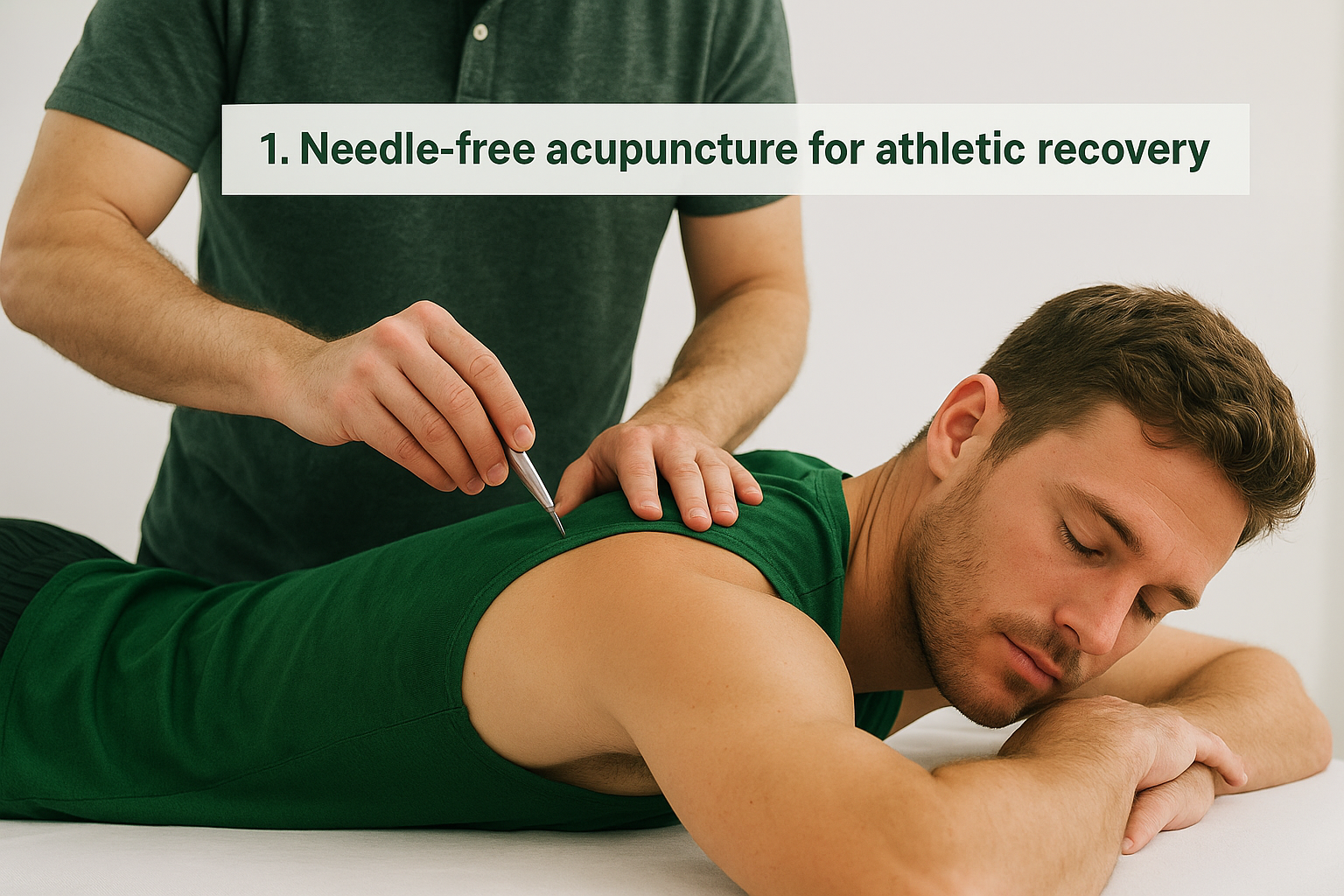
Needle free acupuncture offers a powerful alternative to traditional acupuncture for athletes who want faster recovery without the discomfort of needles. This technique uses specialized tools like the teishin and Doc Blackstone’s signature ceramic spoon to stimulate acupuncture points and work deep into muscles and tendons. You get the benefits of acupuncture while receiving continuous, hands-on treatment that adapts in real time to what your body needs. Unlike traditional sessions where needles stay in place while you rest alone, this approach keeps the practitioner engaged throughout, adjusting pressure and technique as your tissues respond.
Why needle free acupuncture helps athletes recover
Your body responds to needle free acupuncture by increasing blood flow to injured areas and reducing inflammation that slows recovery. The ceramic spoon technique works directly on tendons and muscle fibers, breaking up adhesions and scar tissue that limit range of motion. This method has prevented countless knee and shoulder surgeries by addressing structural problems before they require surgical intervention. Athletes report faster recovery from hard training sessions and competition because the treatment targets both the energy pathways recognized in traditional Chinese medicine and the physical structures identified in modern sports medicine.
How Doc Blackstone tailors treatment to your sport
Doc Blackstone assesses your specific sport demands and injury patterns before developing a treatment plan. A runner faces different stress points than a baseball pitcher or a martial artist. Each session adapts to where you are in your training cycle, addressing acute soreness after competition or targeting chronic restrictions during base building phases. The treatment integrates structural alignment and Medical Qigong to support your athletic movement patterns, not just reduce pain.
Conditions and injuries this technique can address
This approach treats chronic pain conditions like tendonitis, plantar fasciitis, and lower back pain that sideline athletes for weeks or months. You can address acute injuries including muscle strains, joint sprains, and overuse injuries before they become chronic problems. The technique also prevents surgeries by reforming damaged tissue in knees, shoulders, and backs. Beyond injury treatment, athletes use needle free acupuncture to manage stress, improve sleep quality, and maintain peak performance throughout demanding seasons.
How the Sacred Healing Tree system supports recovery
The Sacred Healing Tree system combines Japanese needle free techniques with structural alignment, emotional release therapy, and Chinese herbal medicine. This comprehensive model addresses physical injuries while also treating the energetic imbalances that slow recovery and increase injury risk. Your treatment plan may include recommendations for herbal formulas that reduce inflammation, support tissue repair, or improve sleep. The system recognizes that true athletic recovery techniques must address mind, body, and energy together rather than treating symptoms in isolation.
"The Sacred Healing Tree provides a complete framework for healing that goes beyond surface-level symptom management to address root causes of injury and poor recovery."
How often to schedule sessions around training
Most athletes benefit from weekly sessions during heavy training blocks and bi-weekly maintenance during lighter phases. If you face an acute injury or prepare for competition, you may need two or three sessions per week initially, then taper as recovery progresses. Schedule treatments on recovery days or light training days rather than immediately before hard workouts or competitions. Your practitioner will adjust frequency based on how your body responds and what your training calendar demands.
2. Prioritize sleep and true rest
Sleep stands as the most powerful athletic recovery technique available, yet most athletes sacrifice it for extra training time or busy schedules. Your body performs critical repair work during sleep that cannot happen any other way. Without adequate quality sleep, you undermine every other recovery strategy you use. Deep sleep triggers growth hormone release and rebuilds damaged muscle tissue from training stress. This section shows you how to make sleep work for your performance instead of against it.
Why sleep drives muscle repair and performance
Your body enters anabolic states during deep sleep cycles where muscle protein synthesis peaks and tissue repair accelerates. Growth hormone levels surge during slow-wave sleep, supporting recovery from intense training. Poor sleep quality reduces testosterone and increases cortisol, creating a hormonal environment that breaks down muscle and stores fat. Research shows that even one night of restricted sleep impairs reaction time, decision-making, and physical output the next day. Athletes who consistently sleep seven to nine hours perform better and recover faster than those who cut sleep short.
"Sleep is when your body performs the deep repair work that determines whether training stress becomes adaptation or breakdown."
How much sleep athletes really need
Most athletes need seven to nine hours of quality sleep per night during regular training periods. You may require closer to nine or ten hours during high-volume training blocks or competition seasons when physical demands increase. Individual needs vary based on training intensity, stress levels, and recovery capacity. Track your sleep duration and quality against your performance and how you feel each morning to find your optimal range.
Signs you do not recover well overnight
Your body sends clear signals when sleep fails to provide adequate recovery:
- Waking up tired despite sleeping seven or more hours
- Increased muscle soreness that lingers beyond 48 hours
- Declining performance in workouts despite consistent training
- Higher resting heart rate in the morning
- Increased irritability and difficulty concentrating
Simple ways to improve sleep quality
Small changes to your sleep environment and pre-bed routine create meaningful improvements in recovery. Keep your bedroom cool, dark, and quiet. Avoid screens for at least one hour before bed since blue light disrupts melatonin production. Establish a consistent sleep schedule even on weekends. Limit caffeine after 2 PM and avoid large meals within three hours of bedtime.
When to nap for extra recovery
Strategic naps provide additional recovery without disrupting nighttime sleep. Take 20 to 30-minute power naps in the early afternoon when energy naturally dips. Longer naps of 90 minutes allow a full sleep cycle and work well on rest days or after morning training sessions. Avoid napping after 3 PM as this can interfere with falling asleep at night.
3. Use active recovery days
Active recovery means moving your body at low intensity to promote blood flow and reduce soreness without adding training stress. This approach sits between complete rest and hard training, giving your muscles the circulation they need to clear waste products while avoiding the fatigue that comes from intense work. Many athletes skip active recovery or turn it into another hard session, which defeats the purpose and slows overall progress. When done correctly, active recovery speeds up the repair process and prepares you for your next challenging workout.
What counts as true active recovery
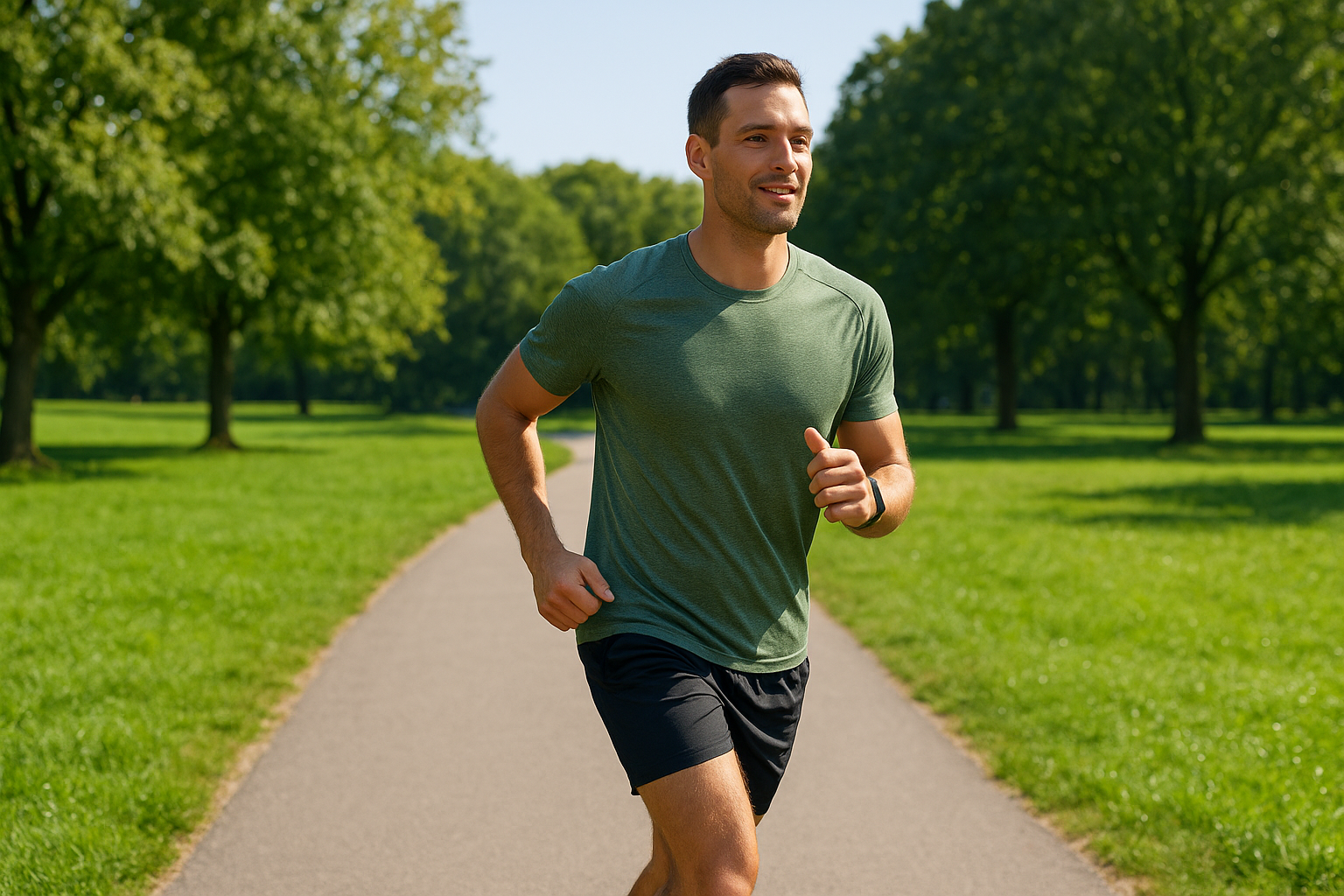
True active recovery involves light movement at 30 to 50 percent of your maximum effort. Walking, easy cycling, swimming, or gentle yoga all qualify when you maintain low intensity throughout the session. Your heart rate should stay in a comfortable zone where you can hold a conversation easily. Activities that require minimal mental focus work better than technical skill sessions that add cognitive stress to physical movement.
Choose the right intensity and duration
Keep active recovery sessions between 20 and 40 minutes to provide benefits without creating additional fatigue. Your breathing should remain relaxed and steady throughout the activity. If you feel your muscles working hard or notice your heart rate climbing, you have crossed from recovery into training. Monitor how you feel the next day as the true test of whether your intensity stayed in the recovery zone.
Sample active recovery sessions for athletes
Runners benefit from easy walking or pool jogging for 30 minutes. Cyclists can spin on flat routes at conversational pace for 20 to 30 minutes. Strength athletes respond well to light mobility work followed by 15 minutes of walking. Team sport athletes often use swimming or stationary biking to avoid impact while maintaining gentle movement.
How to fit active recovery into a weekly plan
Schedule active recovery days between hard training sessions rather than stacking multiple intense days together. Most athletes need one to two active recovery days per week depending on training volume. Place these sessions on days when you feel moderately sore but not severely fatigued. The timing matters as much as the activity itself.
"Active recovery works by promoting circulation and reducing stiffness without adding stress that requires additional adaptation."
Mistakes that turn recovery into extra training
Many athletes push too hard during recovery sessions, turning them into moderate-intensity workouts that require recovery themselves. Adding intervals, hills, or competitive elements transforms recovery into training. Going too long extends what should be brief sessions into endurance work. Choosing activities that require high coordination or mental focus adds stress instead of promoting rest.
4. Dial in nutrition and hydration
Your body cannot recover from training stress without the right fuel and adequate hydration. Food provides the raw materials for muscle repair, glycogen restoration, and cellular regeneration that athletic recovery techniques depend on. Water regulates every metabolic process your body uses to adapt to training. Most athletes eat and drink based on hunger and convenience rather than strategic timing that maximizes recovery. Small adjustments to when and what you consume around workouts create measurable improvements in how quickly you bounce back.
Key nutrients that speed up recovery
Protein delivers the amino acids your muscles need to repair damaged fibers and build new tissue. Aim for 20 to 40 grams of quality protein within two hours after training. Carbohydrates replenish glycogen stores depleted during exercise, with higher intensity sessions requiring more carbohydrate to fully restore energy reserves. Healthy fats support hormone production and reduce inflammation throughout your body.
Time your meals and snacks around workouts
Eat a balanced meal two to three hours before training to provide sustained energy without digestive discomfort. Consume a combination of protein and carbohydrates within 30 to 60 minutes after finishing your workout when your muscles absorb nutrients most efficiently. This post-workout window accelerates recovery by starting the repair process immediately.
Hydration strategies for training and game days
Drink 16 to 20 ounces of water two hours before exercise to ensure proper hydration status. During workouts lasting longer than 60 minutes, consume 7 to 10 ounces every 15 to 20 minutes. Replace 150 percent of fluid lost through sweat within four hours after training by weighing yourself before and after sessions.
How to adjust fueling on heavy and light days
Increase carbohydrate intake on high-intensity training days to match energy demands and support recovery. Reduce total calories and carbohydrates on rest or active recovery days while maintaining consistent protein intake. This approach prevents unnecessary fat gain while ensuring adequate recovery resources.
Supplements that may help and when to use them
Creatine monohydrate supports power output and muscle recovery when taken daily at 3 to 5 grams. Omega-3 fatty acids reduce inflammation and may speed recovery from intense sessions. Use protein powder for convenience when whole food options are not available within your post-workout window.
5. Stretching and mobility training
Mobility training keeps your joints moving through their full range of motion while maintaining the stability and control you need for athletic performance. Unlike passive stretching that simply lengthens muscles, mobility work combines movement, strength, and flexibility to improve how your body functions during training and competition. Regular mobility sessions prevent compensation patterns that lead to injury and help you maintain proper form when fatigue sets in.
How mobility work protects joints and muscles
Your joints require specific ranges of motion to distribute force properly during athletic movements. When mobility restrictions develop, adjacent joints and muscles compensate by moving beyond their optimal ranges. This compensation creates excessive stress on tissues that were not designed for those movement patterns. Mobility training maintains balanced joint function and reduces injury risk by ensuring proper biomechanics throughout your entire kinetic chain.
When to stretch before and after workouts
Perform dynamic mobility drills before training to prepare your nervous system and increase blood flow to working muscles. Save static stretching for after workouts when your muscles are warm and your nervous system does not need high activation. Hold static stretches for 30 to 60 seconds per muscle group, focusing on areas that feel tight or restricted.
Simple daily mobility routine for athletes
Spend 10 minutes each morning working through hip circles, thoracic rotations, ankle mobility, and shoulder dislocations with a band. Target problem areas specific to your sport with additional sets.
"Consistent mobility work prevents small restrictions from becoming chronic limitations that derail training."
How to adapt mobility for different sports
Running-based sports require hip flexor and ankle mobility, while overhead athletes need thoracic spine and shoulder work. Choose mobility drills that match your sport’s primary movement patterns.
Common stretching myths to skip
Stretching before strength training does not prevent injury and may reduce force production. You do not need to stretch for 30 minutes daily to maintain mobility.
6. Foam rolling and recovery tools
Foam rolling and similar recovery tools give you a practical way to address muscle tension and improve tissue quality between training sessions. These tools work directly on your muscles and fascia to reduce soreness, improve mobility, and prepare your body for the next workout. You control the pressure and duration, making this one of the most accessible athletic recovery techniques available. Most athletes benefit from a simple routine that targets problem areas without requiring expensive equipment or professional assistance.
How foam rolling affects muscle and fascia
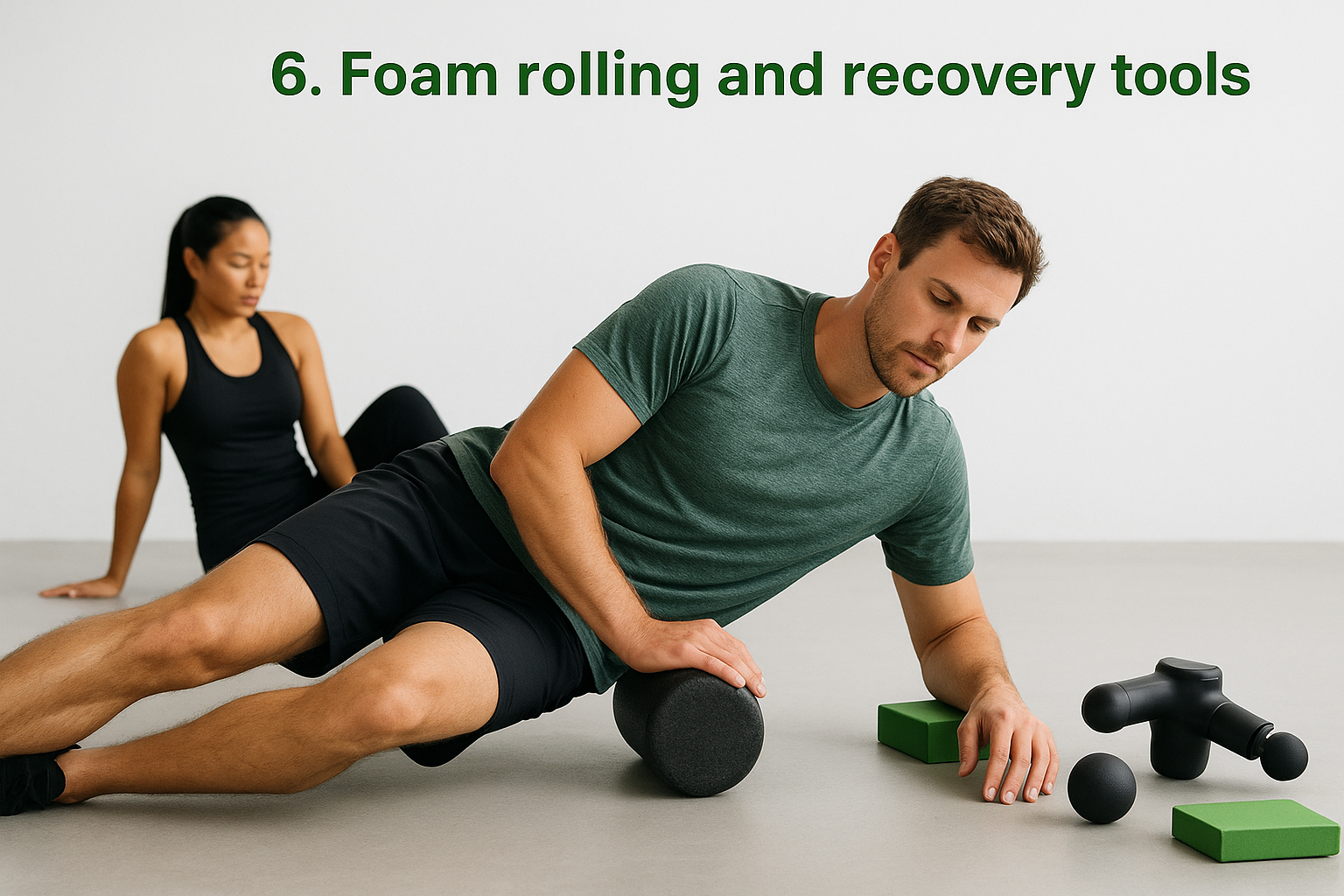
Foam rolling applies sustained pressure to muscle tissue and the fascial layers surrounding it. This pressure increases blood flow to the area and may help break up adhesions that restrict movement. Your nervous system responds by reducing muscle tension and improving range of motion temporarily. The mechanical stress signals your body to increase fluid exchange in the tissue, supporting recovery from training stress.
Where and how long to roll key muscle groups
Focus on major muscle groups like quads, hamstrings, calves, and lats that accumulate tension from training. Spend 30 to 60 seconds per muscle group, moving slowly over the tissue. Apply extra time to tender spots without forcing excessive pain.
When to use massage guns and other tools
Massage guns work well for quick pre-workout muscle activation or post-training recovery when you need targeted relief. Lacrosse balls reach smaller areas foam rollers miss, particularly around the hips and shoulders.
"Recovery tools become effective when you use them consistently rather than only when pain forces you to address a problem."
Build a short foam rolling routine you will follow
Create a 5 to 10-minute routine covering your sport-specific problem areas. Complete this routine on training days after your cooldown or on rest days as active recovery.
When you should avoid aggressive self release
Avoid rolling directly over joints, bones, or areas of acute injury. Skip aggressive pressure if you experience sharp pain rather than muscle discomfort. Reduce intensity if you develop increased soreness lasting beyond 24 hours.
7. Cold therapy and contrast hydrotherapy
Cold therapy reduces inflammation and muscle soreness by constricting blood vessels and slowing metabolic activity in damaged tissue. Contrast hydrotherapy alternates between hot and cold water exposure to create a pumping effect that moves fluid through your muscles. Both methods rank among the most studied athletic recovery techniques, though the research shows mixed results depending on timing and application. You gain the most benefit when you apply these strategies strategically rather than using them after every workout.
When cold therapy helps recovery most
Cold therapy works best within two hours after high-intensity training or competition when inflammation peaks. Use it after sessions involving heavy eccentric loading, sprinting, or repeated impacts that cause significant muscle damage. Skip cold therapy following strength sessions where you prioritize muscle growth since the reduced inflammation may interfere with adaptation signals your body needs.
How to use ice baths and cold showers safely
Immerse yourself in water between 50 and 59 degrees Fahrenheit for 10 to 15 minutes. Start with shorter durations and gradually increase as your body adapts. Cold showers provide similar benefits with two to three minutes at the coldest setting you can tolerate.
Contrast water routines you can follow
Alternate one minute of cold water with two minutes of warm water for three to five cycles. End on cold to maximize the recovery response. This method creates repeated vasoconstriction and vasodilation that promotes circulation.
"Contrast hydrotherapy leverages temperature changes to enhance blood flow and waste removal without the potential downsides of prolonged cold exposure."
How cold affects muscle growth and adaptation
Frequent cold therapy may blunt the inflammatory signals that drive muscle protein synthesis after strength training. Reserve ice baths for recovery between competitions rather than daily training blocks focused on building strength.
Risks and when to skip cold exposure
Avoid cold therapy if you have cardiovascular conditions or Raynaud’s disease. Skip it when recovering from injuries requiring increased blood flow for healing.
8. Compression and elevation strategies
Compression gear and elevation combine to reduce swelling and improve blood flow back to your heart after training. These simple athletic recovery techniques work by counteracting gravity’s effect on fluid pooling in your extremities. You gain the most benefit by using both strategies together within the first few hours after hard sessions that stress your legs or arms.
How compression supports circulation and recovery
Compression applies graduated pressure to your limbs that helps push blood and lymphatic fluid back toward your core. This mechanical assistance reduces the space available for swelling and may speed the removal of metabolic waste from tissues. Your cardiovascular system works more efficiently when compression supports venous return, particularly in your lower legs where blood fights hardest against gravity.
When to use compression gear or sleeves
Wear compression immediately after high-intensity sessions or competitions that cause significant muscle damage. Keep gear on during long travel periods when sitting reduces circulation naturally.
Combine compression with elevation and movement
Elevate your legs above heart level while wearing compression gear for maximum fluid drainage. Add gentle ankle pumps or leg movements every few minutes to enhance the effect.
"Compression and elevation work together to reduce swelling more effectively than either strategy alone."
How long to wear compression after hard sessions
Use compression for one to two hours post-training when recovery benefits peak. Some athletes wear gear overnight but research does not strongly support extended use.
Limits of compression and what it cannot fix
Compression reduces swelling but does not repair damaged tissue or replace proper rest. It cannot compensate for inadequate sleep or poor nutrition timing.
9. Heat therapy sauna and red light
Heat therapy relaxes tight muscles and increases blood flow to areas that need recovery support. Sauna sessions and infrared therapy create systemic warmth that reduces stiffness and may speed healing in chronic injuries. These methods work differently than cold therapy by promoting circulation rather than restricting it, making heat useful when you need tissue flexibility and relaxation instead of inflammation control. Both traditional saunas and newer technologies like red light devices give you options for incorporating heat into your recovery plan.
Benefits of heat therapy for stiff and sore muscles
Heat increases blood vessel dilation and brings more oxygen and nutrients to muscles that feel tight or chronically sore. Your muscle fibers relax under sustained warmth, releasing tension that builds up from repetitive training patterns. This approach works especially well for chronic conditions like lower back stiffness or shoulder tension that respond poorly to ice.
How to use sauna time without overdoing it
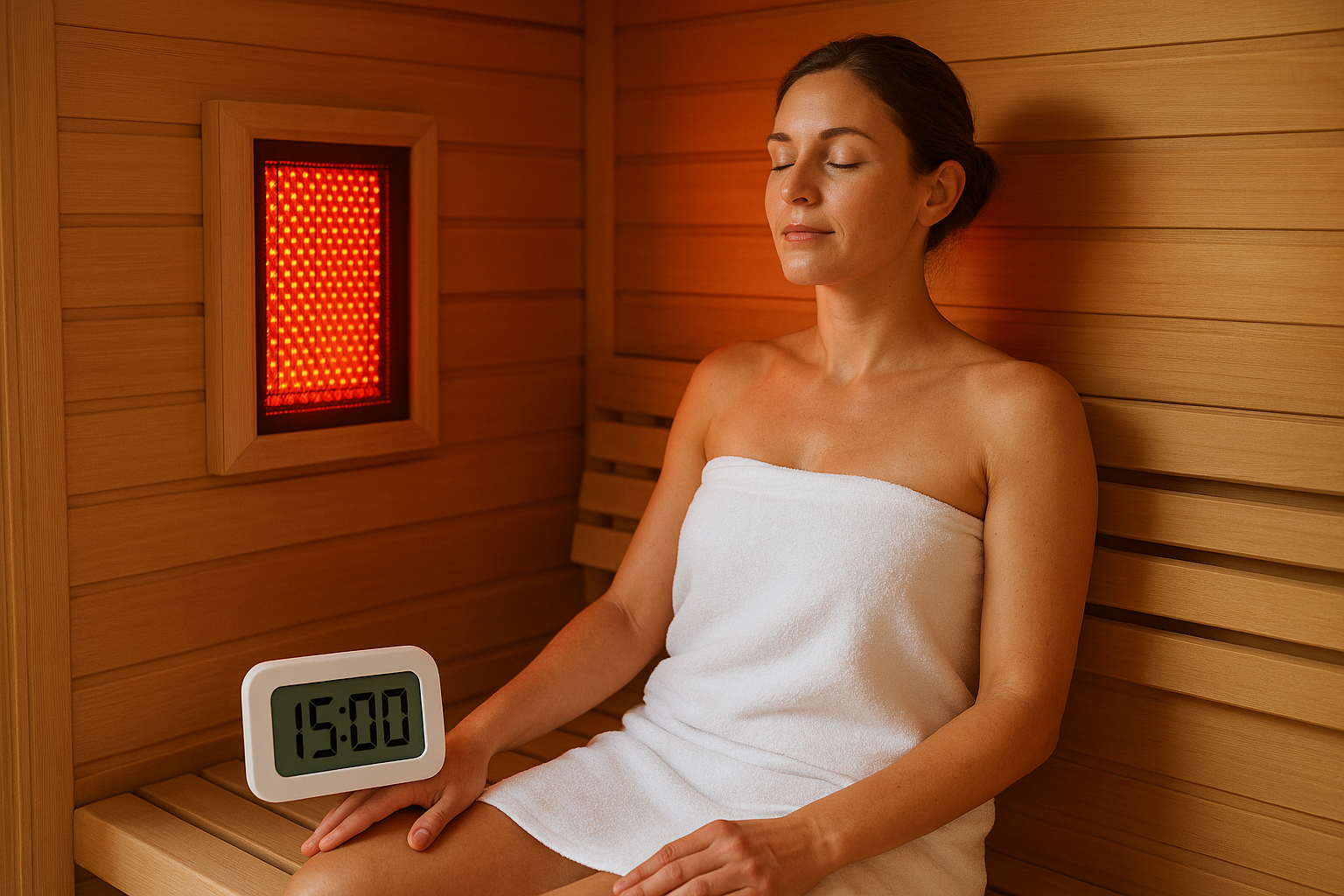
Limit sauna sessions to 15 to 20 minutes at temperatures between 150 and 190 degrees Fahrenheit. Start with shorter durations and increase gradually as your body adapts. Hydrate before and after each session since heat exposure increases fluid loss significantly.
When to choose heat instead of cold
Use heat for chronic pain and stiffness rather than acute injuries with active inflammation. Choose sauna sessions during recovery weeks or lighter training blocks when adaptation takes priority over reducing acute soreness.
"Heat therapy supports recovery by promoting circulation and tissue flexibility rather than controlling inflammation like cold exposure does."
What we know about red light and infrared therapy
Research suggests red light therapy may reduce muscle fatigue and support cellular energy production through mitochondrial effects. Infrared devices penetrate deeper than traditional heat sources, potentially reaching tissues that surface warming misses.
Who should avoid or limit heat based recovery
Skip heat therapy if you have cardiovascular conditions or high blood pressure that worsen with temperature increases. Pregnant athletes should consult their physician before using saunas or infrared therapy.
Make recovery part of training
Recovery deserves equal attention to your training sessions because adaptation happens during rest, not during workouts. Schedule your recovery strategies with the same discipline you apply to strength sessions or conditioning work. Track sleep quality, plan active recovery days, and use the techniques that match your training intensity throughout each week. Athletes who treat recovery as optional struggle with persistent soreness, declining performance, and increased injury rates.
Your body tells you what it needs through clear signals like lingering fatigue, reduced power output, and nagging pain that does not resolve with rest alone. These athletic recovery techniques work best when you apply them consistently rather than waiting until problems force you to address them. Doc Blackstone’s needle-free acupuncture approach combines hands-on treatment with personalized recovery protocols that support your specific sport and training demands.