You bought a gua sha tool. You watched the videos. Now you stare at that smooth stone and wonder how often to do gua sha without wrecking your skin or wasting your time. Some influencers swear by daily sessions. Others warn you’ll damage your face if you overdo it. Your skin deserves better than guesswork.
The truth is frequency depends on your specific skin type, age, and health status. A 25 year old with oily skin can handle a different routine than a 55 year old with sensitive skin. You need a personalized approach that maximizes benefits while protecting your skin barrier.
This guide walks you through a four step system to find your ideal gua sha schedule. You’ll learn the baseline frequency that works for most people. Then you’ll adjust based on your skin type, your age, and any health conditions that matter. By the end, you’ll have a clear weekly routine that fits your life and delivers real results without the confusion.
Why gua sha frequency matters
Your skin operates on biological repair cycles that dictate how often you can safely scrape without causing harm. When you perform gua sha, you create micro circulation changes and stimulate lymphatic flow. Your skin needs time between sessions to process these changes and rebuild protective barriers. Push too hard, and you risk chronic inflammation that defeats the entire purpose.
Your skin’s recovery window determines results
Most facial skin completes its natural repair cycle every 48 to 72 hours. This window explains why daily gua sha can backfire for many people. Each stroke temporarily disrupts the skin barrier and creates localized pressure that your lymphatic system must process. If you repeat the treatment before your skin recovers, you compound the stress instead of building benefits.
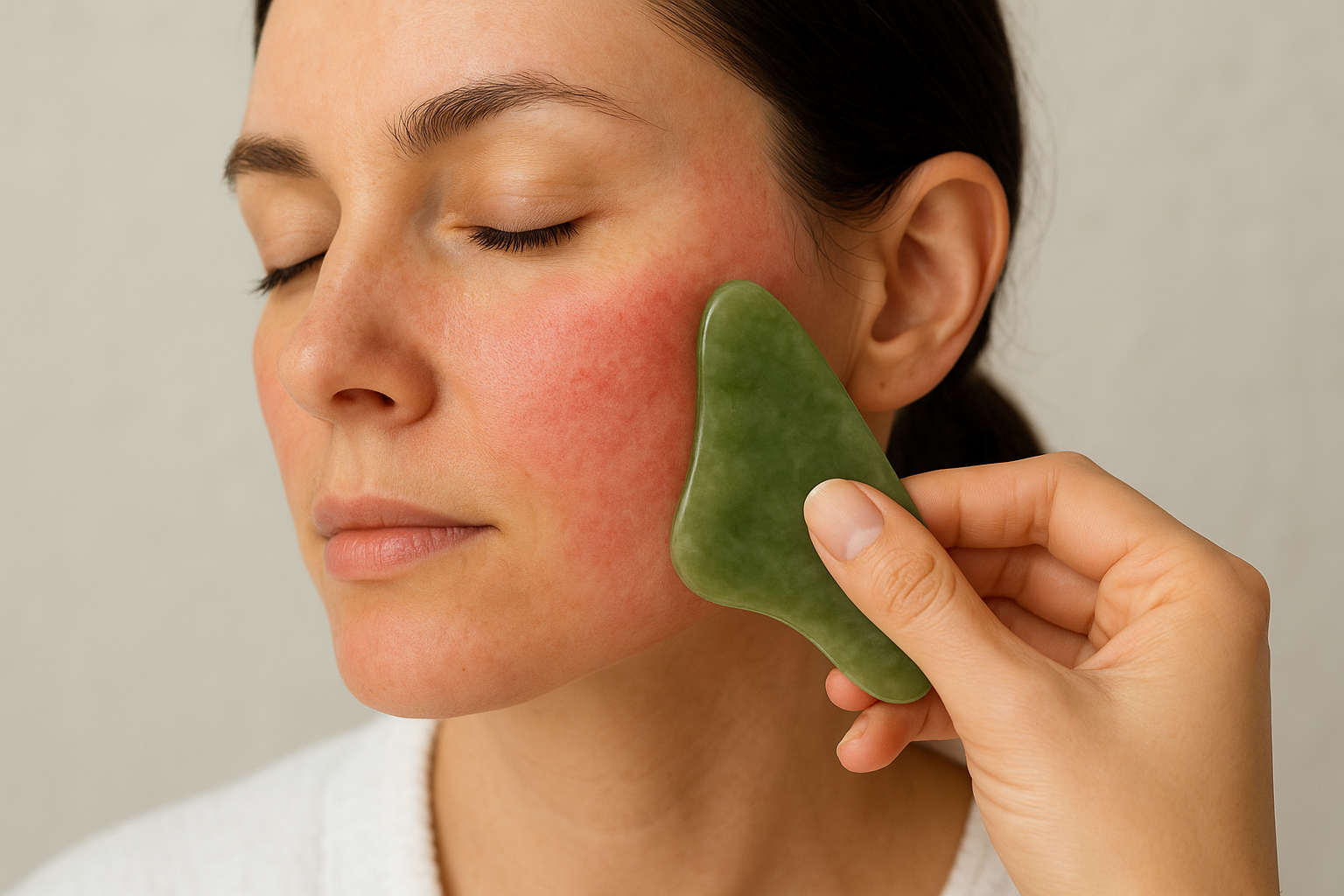
Overdoing gua sha leads to persistent redness, broken capillaries, and increased sensitivity that takes weeks to heal. You might notice your skin feeling raw or looking inflamed after sessions. These signs mean you crossed from therapeutic pressure into damaging territory.
The right frequency transforms gua sha from risky beauty trend into reliable therapeutic tool.
Frequency affects your lymphatic drainage capacity
Your lymphatic system moves slowly compared to blood circulation. It relies on gentle, rhythmic stimulation rather than aggressive force. When you space gua sha sessions properly, you give your lymph nodes time to process and clear the fluids you mobilized during treatment. Sessions timed too close together overwhelm this natural drainage pathway, causing fluid to back up and create more puffiness instead of less.
Understanding how often to do gua sha means respecting both your skin’s surface recovery and your body’s deeper drainage capacity. This balance varies based on individual factors you’ll learn to assess in the following steps.
Step 1. Learn the basic gua sha schedule
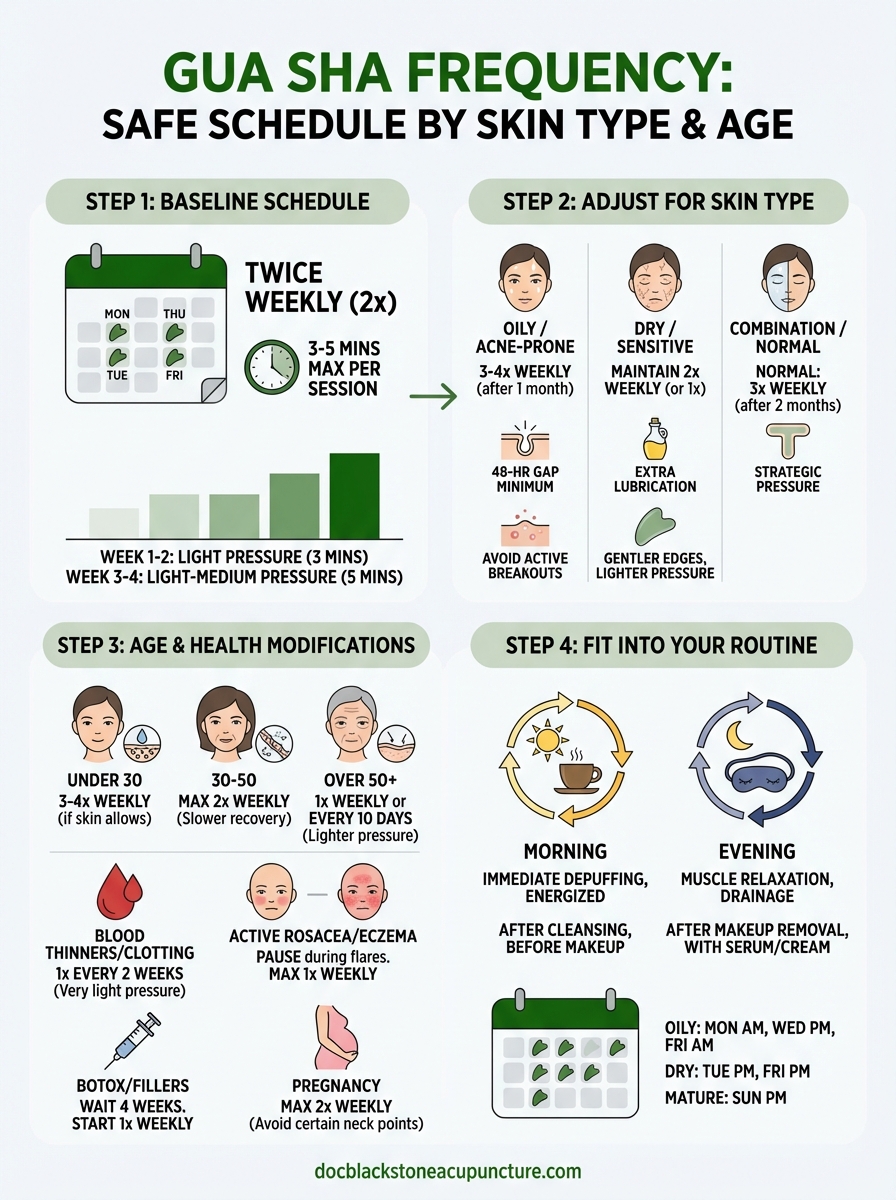
Start with a baseline frequency that works for 80% of people regardless of their unique factors. This foundation prevents mistakes while your skin adapts to the new stimulus. You’ll adjust this schedule in later steps, but beginning here gives you a safe reference point that minimizes risk of overtreatment while delivering measurable benefits.
The universal starting frequency
Perform gua sha twice per week with at least two full days between sessions. This spacing allows your skin’s natural repair mechanisms to complete their work before you introduce new stimulus. Most practitioners recommend Monday and Thursday or Tuesday and Friday patterns that create consistent intervals without weekend interruptions.
Each session should last three to five minutes maximum when you’re starting out. Focus on proper technique rather than extended duration. Your skin needs time to adapt to the scraping motion and pressure, even when you’re using gentle strokes. Longer sessions at this stage increase inflammation without adding benefits.
Consistency at moderate frequency beats sporadic aggressive sessions every time.
Track your sessions in a simple log that captures the date, duration, and any immediate skin reactions you notice. This record becomes invaluable when you adjust frequency later. Note redness duration, puffiness changes, or any discomfort that lasts beyond 30 minutes after treatment.
Your first month protocol
Follow this schedule for your first four weeks to establish a baseline response pattern:
Week 1-2:
- Sessions: 2 per week
- Duration: 3 minutes each
- Pressure: Light (tool barely depresses skin)
- Morning assessment: Check for residual redness or sensitivity
Week 3-4:
- Sessions: 2 per week
- Duration: 5 minutes each
- Pressure: Light to medium (slight skin blanching during strokes)
- Morning assessment: Note puffiness reduction and skin texture changes
After this foundation month, you’ll have clear data on how your skin responds to consistent gua sha practice. This baseline helps you determine whether to increase, decrease, or maintain frequency when you factor in your specific skin type and other individual variables that affect how often to do gua sha safely.
Step 2. Adjust for your skin type
Your skin type determines how quickly you recover from the mechanical stress of gua sha and how much pressure your barrier can tolerate. The baseline schedule gives you a starting point, but your specific skin characteristics require adjustments to optimize results. Oily skin handles frequent sessions differently than sensitive skin because of variations in natural oil production, barrier thickness, and inflammation response.
Oily and acne-prone skin protocol
Oily skin produces excess sebum that creates resilient barrier function and tolerates more frequent manipulation without breaking down. Your thicker skin texture and active oil glands recover faster from the scraping motion. You can safely increase gua sha frequency to three to four times per week after completing your foundation month.
Space sessions by 48 hours minimum to allow inflammation markers to normalize between treatments. Your active breakouts need special attention: avoid direct pressure over cystic acne or open lesions. Work around these areas with lighter pressure and shorter strokes that still promote lymphatic drainage without aggravating active inflammation.
Oily skin’s natural resilience allows more frequent sessions but demands careful technique around active breakouts.
Monitor your skin’s oil production patterns through your adjustment period. If you notice increased breakouts or excessive oiliness, reduce frequency back to the baseline schedule for two weeks before attempting another increase.
Dry and sensitive skin protocol
Dry skin requires conservative frequency and modified pressure because your thinner barrier layer breaks down faster under mechanical stress. Your natural oil production can’t protect and repair as quickly as oily skin types. Maintain the twice weekly baseline indefinitely or even reduce to once weekly if you experience persistent redness lasting more than four hours after sessions.
Apply extra lubricating oil during treatment to prevent friction damage that your skin struggles to repair. Choose tools with smoother edges and gentler curves that distribute pressure more evenly. Your session duration should stay at the three to four minute maximum rather than extending to five minutes like other skin types can tolerate.
Combination and normal skin protocol
Combination skin responds well to the standard twice weekly schedule with strategic adjustments by facial zone. Use lighter pressure and shorter strokes on your dry cheek areas while applying slightly firmer pressure to oily T-zone regions. This customized approach addresses how often to do gua sha across different facial areas rather than treating your entire face uniformly.
Normal skin tolerates the baseline schedule easily and can increase to three times weekly after two months of consistent practice without adverse effects.
Step 3. Adjust for your age and health
Your age directly impacts collagen density, skin elasticity, and healing speed, all of which determine how often to do gua sha without causing damage. Younger skin bounces back faster from mechanical stress, while mature skin requires gentler, less frequent treatment. Health conditions ranging from blood disorders to autoimmune diseases create additional constraints that override standard frequency recommendations.
Age-related frequency adjustments
Under 30: Your skin produces abundant collagen and repairs quickly from gua sha sessions. You can maintain three to four times weekly after your foundation period if your skin type allows. Your robust healing capacity tolerates consistent pressure without long-term barrier damage.
Ages 30 to 50: Collagen production slows by 1% per year after age 30, reducing your skin’s resilience to mechanical stress. Stick with twice weekly maximum frequency regardless of skin type. Your slower cell turnover means you need longer recovery windows between sessions to prevent cumulative inflammation that leads to sagging rather than lifting.
Over 50: Mature skin has significantly thinner dermis and reduced elasticity that makes it vulnerable to bruising and broken capillaries. Reduce frequency to once weekly or every 10 days with lighter pressure than younger practitioners use. Your skin still benefits from gua sha but cannot tolerate aggressive schedules that work for younger faces.
Mature skin needs longer recovery periods because repair mechanisms slow with age, not because gua sha becomes less effective.
Health conditions that require modifications
Blood thinners or clotting disorders: Reduce gua sha to once every two weeks maximum with extremely light pressure. Your increased bruising risk makes frequent sessions dangerous for facial capillaries.
Active rosacea or eczema: Pause gua sha completely during flare-ups. Between flares, limit sessions to once weekly and avoid inflamed areas entirely. Your compromised barrier cannot handle standard frequencies.
Recent Botox or fillers: Wait four full weeks before resuming any gua sha practice. After that waiting period, start with once weekly for one month before increasing frequency.
Pregnancy: Maintain twice weekly maximum and avoid neck pressure points that traditional Chinese medicine associates with uterine stimulation points.
Step 4. Fit gua sha into your weekly routine
Knowing how often to do gua sha means nothing if you can’t actually make it happen. Your schedule needs specific time blocks and trigger habits that turn good intentions into consistent practice. Most people fail because they treat gua sha as a floating activity rather than anchoring it to existing routines that already happen without willpower.
Morning vs evening timing strategies
Morning sessions deliver immediate depuffing benefits and energized circulation that last through your day. Schedule your gua sha right after washing your face but before applying makeup or sunscreen. This timing gives you visible results when they matter most and creates a natural sequence that’s hard to forget.
Evening practice focuses on muscle relaxation and lymphatic drainage accumulated during the day. Perform your session after removing makeup and cleansing, then follow with your regular serum or night cream. Your relaxed state makes the strokes more effective because facial tension releases easier when your nervous system isn’t in active mode.
Anchor your gua sha to an existing skincare step rather than creating a separate routine time.
Sample weekly schedules by skin type
Match these templates to your specific situation based on the adjustments you identified in previous steps:
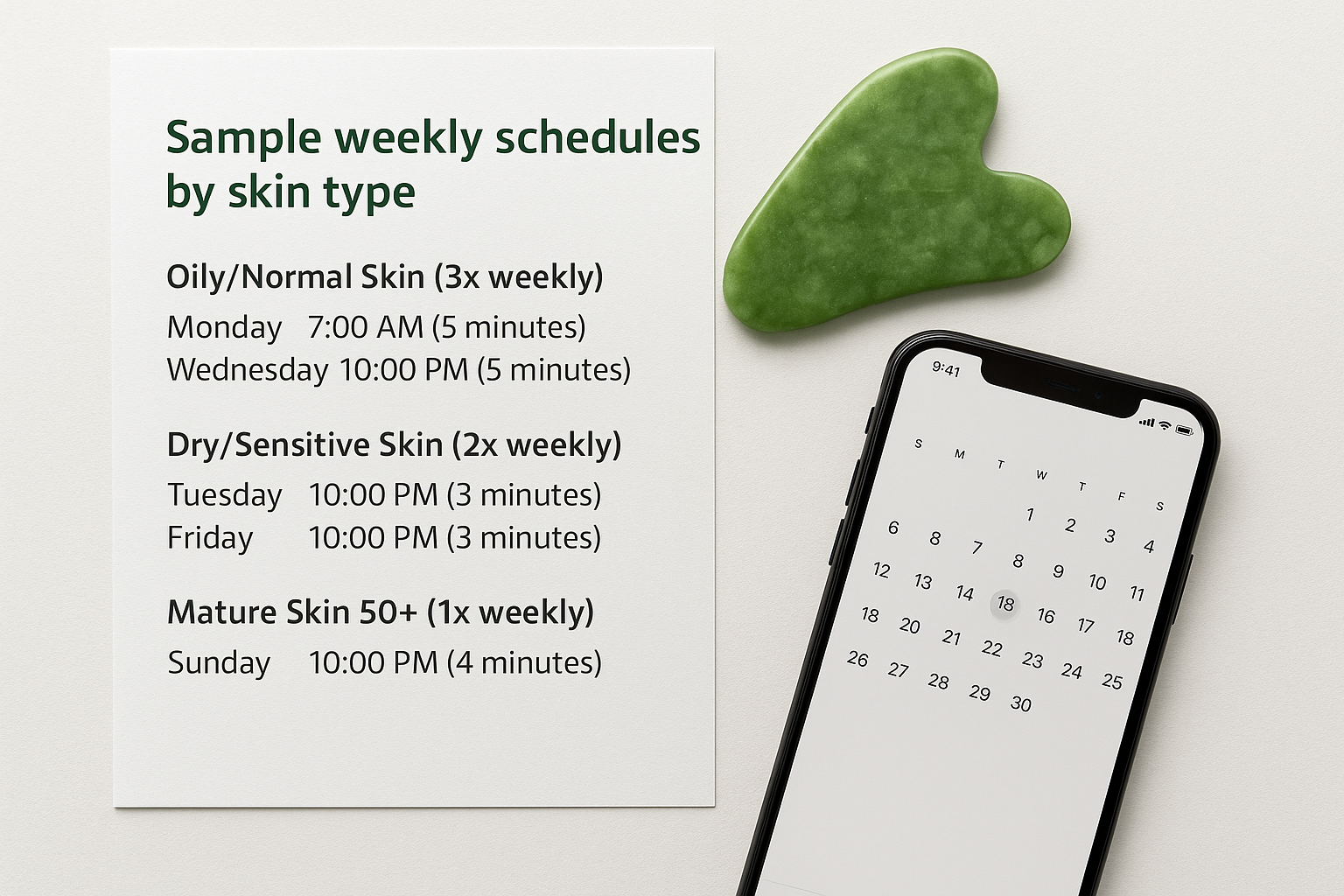
Oily/Normal Skin (3x weekly):
- Monday 7:00 AM (5 minutes)
- Wednesday 10:00 PM (5 minutes)
- Friday 7:00 AM (5 minutes)
Dry/Sensitive Skin (2x weekly):
- Tuesday 10:00 PM (3 minutes)
- Friday 10:00 PM (3 minutes)
Mature Skin 50+ (1x weekly):
- Sunday 10:00 PM (4 minutes)
Block these times in your phone calendar with recurring reminders 10 minutes before each session. Set your tool and oil out the night before morning sessions so friction disappears from the process.
Find your gua sha rhythm
You now have a clear framework to determine how often to do gua sha based on your unique situation. Start with the baseline twice weekly schedule, then adjust for your specific skin type, age, and any health conditions that require modifications. Your personalized frequency prevents both undertreatment that wastes time and overtreatment that damages your skin barrier.
Track your results for eight weeks minimum before making additional changes. Your skin needs consistent practice to reveal its true response pattern. Watch for improvements in puffiness, muscle tension, and overall skin texture that confirm you found your optimal rhythm.
Traditional healing modalities like gua sha work best when combined with other therapeutic approaches that address your body’s deeper imbalances. If you’re seeking expert guidance on facial rejuvenation techniques that complement your gua sha practice, explore Doc Blackstone’s needle-free acupuncture treatments in San Antonio for comprehensive healing support.