
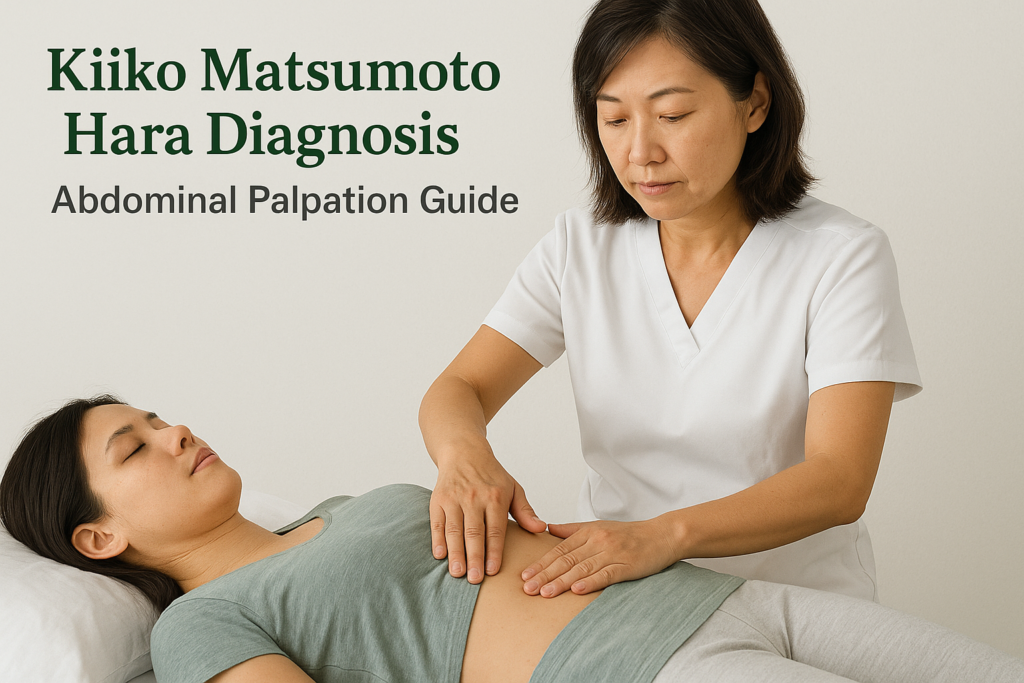
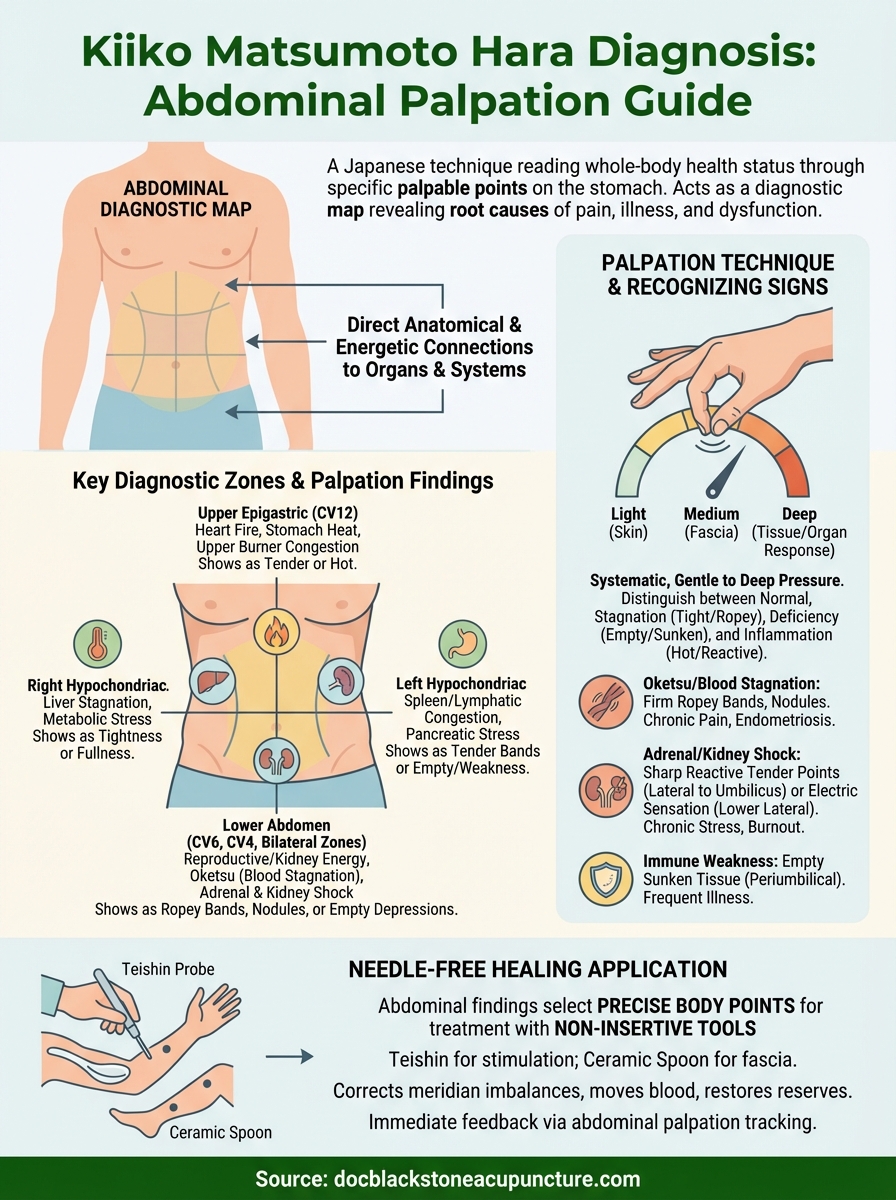
Kiiko Matsumoto hara diagnosis is an abdominal palpation method that reads your body’s health status through specific points on your stomach. Your abdomen acts as a diagnostic map where trained practitioners find areas of tension, tenderness, or emptiness that reveal imbalances in organs, meridians, and systems throughout your entire body. This Japanese technique goes beyond surface symptoms to uncover root causes of pain, illness, and dysfunction that other diagnostic methods often miss.
This guide walks you through the clinical principles and practical applications of Kiiko Matsumoto’s abdominal diagnosis system. You’ll discover why your stomach reflects whole body health, how practitioners perform systematic palpation, and what specific patterns reveal about conditions like blood stagnation, adrenal fatigue, immune weakness, and metabolic stress. You’ll also learn how this diagnostic approach integrates with needle-free acupuncture treatments to create powerful healing outcomes without using traditional needles.
Why the stomach reflects the entire body’s health
Your abdomen serves as a comprehensive diagnostic map because it contains direct anatomical and energetic connections to every major system in your body. The Japanese term "hara" refers to your belly and abdominal region, which traditional Chinese medicine recognizes as the body’s center of vitality and health. When practitioners perform kiiko matsumoto hara diagnosis, they access a wealth of information about distant organs, meridians, and physiological processes that manifest as specific palpable patterns in your abdominal tissues.
The embryological connection between abdomen and organs
Your organs develop from the same embryological tissue layers as your abdominal wall during fetal development, creating permanent neurological and fascial connections that persist throughout your life. The ectoderm, mesoderm, and endoderm layers that form your digestive tract also give rise to other vital organs, establishing communication pathways that remain active even after birth. This developmental origin explains why pressure, tenderness, or tension in specific abdominal zones corresponds to dysfunction in organs that seem anatomically distant.
Practitioners locate these embryological reflex zones on your abdomen where organ distress creates palpable changes in tissue quality, temperature, and sensitivity. Your liver issues show up in the right costal margin, kidney problems manifest in the lower lateral abdomen, and heart imbalances appear in the upper epigastric region. These aren’t random correlations but biological relationships established before you took your first breath.
How meridians converge in your hara
The twelve primary meridians and eight extraordinary vessels all pass through or connect to specific regions of your abdominal cavity, making your hara a central diagnostic crossroads. Your Ren (Conception) meridian runs directly up the centerline of your abdomen, while your Chong (Penetrating) meridian flows through the deeper layers, connecting to all other meridian systems. Organ meridians like Stomach, Spleen, Liver, Kidney, and Large Intestine traverse your abdominal quadrants in predictable patterns.

When meridian energy becomes blocked, deficient, or excessive, your abdominal tissues register these imbalances as palpable reactive points that trained practitioners identify through systematic touch.
Kiiko Matsumoto’s approach maps these meridian convergence zones with precise locations that reveal which energy pathways need treatment. Your practitioner finds tight nodules where Liver meridian excess creates stagnation, empty depressions where Kidney deficiency depletes vitality, and tender reactive areas where Spleen weakness disrupts digestive function. Each discovery guides treatment strategy because correcting the meridian imbalance through appropriate points eliminates the abdominal finding and resolves the underlying condition.
The digestive center as a diagnostic mirror
Your digestive system processes food, extracts nutrients, and eliminates waste, but it also serves as a metabolic and immune command center that responds to stress, inflammation, and systemic dysfunction throughout your entire body. The gut-brain axis connects your abdominal nervous system to your central nervous system, creating bidirectional communication that makes your belly react to emotional stress, hormonal changes, and neurological imbalances. Your intestinal lining houses 70% of your immune system, so immune dysfunction always shows up in your abdominal palpation findings.
Blood flow patterns, lymphatic drainage, and fascial tension in your abdomen change in response to distant pathology and systemic imbalance. Your body redirects resources to areas under stress, creating compensatory tension patterns that skilled hands detect. Chronic shoulder pain creates palpable tightness in your upper abdomen, knee problems manifest in your lower abdominal quadrants, and hormonal imbalances appear as specific tender points along your lower belly. Your abdomen literally mirrors what happens everywhere else in your body because physiological systems interconnect through blood, lymph, nerves, and energy pathways.
Practitioners use these abdominal reflections to identify root causes rather than chase symptoms. Your migraine headaches might originate from liver stagnation found in your right hypochondriac region, your anxiety could stem from heart fire detected in your epigastrium, or your fertility challenges may trace back to kidney deficiency revealed in your lower lateral abdomen. The diagnostic information your hara provides directs treatment to the source of your problem.
How to perform Kiiko Matsumoto style palpation
Kiiko Matsumoto style palpation requires systematic technique and refined touch sensitivity that you develop through practice and proper training. Your fingers become diagnostic instruments that detect subtle changes in tissue density, temperature, moisture, and reactive tenderness across specific abdominal zones. The method combines Japanese precision with clinical efficiency, allowing you to gather comprehensive diagnostic information in minutes while maintaining patient comfort throughout the examination.
Positioning your patient correctly
Your patient lies supine on a comfortable treatment table with knees slightly bent and supported by a bolster or pillow to relax the abdominal muscles. This position prevents defensive muscle guarding that blocks access to deeper tissue layers where diagnostic information lives. You want your patient’s abdomen soft and receptive, so they breathe naturally without holding tension in their belly wall.
Position yourself at your patient’s right side regardless of which hand you use for palpation. This placement gives you optimal access to all abdominal quadrants and maintains consistent angles for comparing bilateral points. Your free hand rests gently on your patient’s shoulder or arm to establish energetic connection and monitor their overall response to palpation.
The systematic palpation sequence
You begin kiiko matsumoto hara diagnosis at the upper epigastric region beneath the xiphoid process, using gentle fingertip pressure to assess heart fire, stomach heat, and upper burner congestion. Your touch starts superficial and gradually deepens as tissues soften, never forcing past protective muscle resistance. You work methodically from top to bottom, lateral to medial, covering the entire abdomen in a reproducible pattern that prevents missing critical diagnostic zones.
Your palpation pressure ranges from light skin contact to deeper fascial engagement, adapting constantly to tissue response and patient feedback.
The midline Ren meridian points receive special attention because they reflect overall vitality and specific organ function. You check CV12 for digestive strength, CV6 for reproductive and kidney energy, and CV4 for constitutional foundation. Lateral abdominal zones reveal meridian-specific imbalances, with left and right sides offering comparative information about bilateral organ pairs like kidneys, adrenals, and ovaries.
Reading tissue quality and reactive points
Your fingers distinguish between normal soft tissue and pathological findings through texture, temperature, and patient reaction. Tight ropey bands indicate excess conditions and stagnation, empty depressions signal deficiency and weakness, while hot reactive points reveal inflammation and active pathology. You note exact locations, size, and severity of each finding because these details determine treatment point selection and needle depth in traditional practice or tool application in needle-free approaches.
Reactive points feel different from surrounding tissue and create immediate patient discomfort when palpated, even with gentle pressure. Your patient might wince, hold their breath, or report sharp tenderness that radiates to other body areas. These reactions confirm you’ve located active diagnostic zones that connect to their chief complaints and underlying imbalances.
Recognizing Oketsu and blood stagnation signs
Oketsu represents blood stagnation in Japanese acupuncture terminology, and your abdominal palpation findings reveal this condition through specific locations, textures, and patient reactions. Blood that stops moving properly creates fixed painful masses, tight ropey bands, and tender reactive zones in predictable abdominal areas that correspond to different types of stagnation patterns. Your ability to identify these signs allows you to address conditions like endometriosis, fibroids, chronic pain syndromes, menstrual disorders, and post-surgical adhesions that conventional diagnostics often miss or misinterpret.
Primary Oketsu diagnostic zones
The lower abdomen between CV4 and CV6 serves as the primary diagnostic area for blood stagnation because this region houses reproductive organs and major blood vessels where stasis most commonly develops. You find tight nodular masses, firm resistance, or sharp reactive points that feel distinctly different from surrounding soft tissue. Women with endometriosis, fibroids, or severe menstrual pain consistently show palpable pathology in these zones, while men with prostate issues or chronic pelvic pain present similar findings.
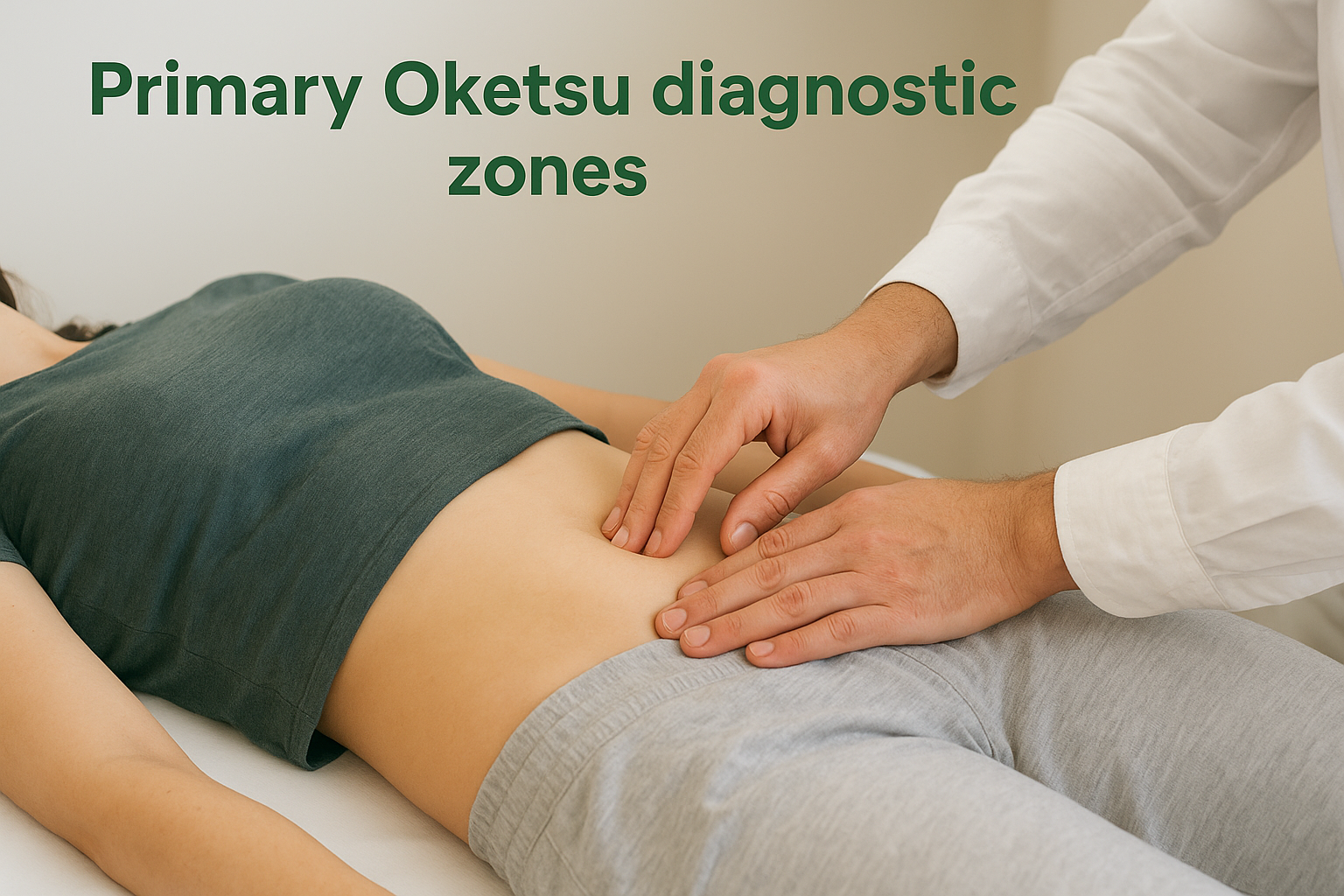
Your fingers detect bilateral differences in the lower lateral abdomen corresponding to ovary or kidney regions, where blood stasis creates asymmetrical tension and tenderness. The left lower quadrant often reveals sigmoid colon stagnation that mimics gynecological conditions, so you correlate abdominal findings with other diagnostic information. Pressure on these zones reproduces your patient’s familiar pain patterns, confirming the connection between palpation findings and their symptoms.
Texture characteristics of blood stasis
Blood stagnation creates firm ropey bands that feel like taut guitar strings beneath your fingertips, distinctly harder than normal abdominal tissue. These bands resist gentle pressure and don’t soften easily when you maintain contact, unlike muscular tension that releases with sustained touch. You might find small hard nodules the size of peas or beans that represent localized blood stasis, often tender to even light palpation.
Fixed masses that don’t move or change with breathing patterns indicate chronic blood stagnation requiring sustained treatment intervention.
Temperature differences mark stagnation zones, with cool areas suggesting long-standing stasis and hot reactive points indicating acute inflammation combined with blood pooling. Your patient reports sharp stabbing pain when you press blood stagnation points, different from the dull ache of qi deficiency or the burning sensation of excess heat.
Common stagnation patterns in kiiko matsumoto hara diagnosis
Post-surgical patients develop characteristic scar tissue patterns that create pulling sensations and adhesions detectable through abdominal palpation. You trace these restrictions from surgical sites to distant abdominal regions where compensatory tension develops. Cesarean scars, appendectomy sites, and laparoscopic port locations all create predictable stagnation zones that persist years after surgery unless specifically treated.
Chronic pain conditions like fibromyalgia, arthritis, and old injuries manifest as scattered tender points throughout the abdomen that mirror pain distribution in the body. Each tender abdominal zone corresponds to specific musculoskeletal regions, allowing you to map your patient’s pain pattern through systematic hara diagnosis. Treating these abdominal stagnation points often resolves distant pain that resisted other therapeutic approaches.
Pinpointing adrenal and kidney shock points
Your adrenal and kidney shock points reveal acute and chronic stress responses that drain your body’s foundational energy reserves and create widespread dysfunction throughout multiple systems. These specific abdominal zones react to physical trauma, emotional overwhelm, sleep deprivation, chronic illness, and prolonged pain that exhaust your hypothalamic-pituitary-adrenal axis and deplete kidney essence in traditional Chinese medicine terms. Practitioners trained in kiiko matsumoto hara diagnosis locate these reactive points through precise palpation of bilateral zones that correspond to adrenal glands and kidney function, finding tenderness, emptiness, or shock-like reactive patterns that guide treatment intervention.
Locating bilateral adrenal reflex zones
Your adrenal reflex points sit lateral to the umbilicus at approximately the level of your belly button, about two to three finger widths to each side along an imaginary horizontal line. These zones correspond anatomically to where your adrenal glands rest atop your kidneys in your retroperitoneal space, creating neurological reflex pathways that manifest adrenal dysfunction as palpable abdominal findings. You detect these points by applying gentle fingertip pressure that gradually deepens into the tissue layers until you encounter reactive sensitivity or notable tissue changes.
Stressed adrenals create sharp reactive tenderness that makes you flinch or hold your breath when the practitioner contacts the exact point, while depleted adrenals produce an empty sunken quality that feels hollow under the fingers. The tissue around active adrenal shock points often feels tight and resistant, creating a distinct contrast with softer surrounding tissue. Practitioners compare bilateral findings because asymmetry indicates which side carries more stress burden or which adrenal requires more immediate support.
Kidney shock point characteristics
Your kidney shock points appear in the lower lateral abdomen, roughly halfway between your hip bone (anterior superior iliac spine) and your pubic bone on each side. These regions correspond to Kidney 13 and Kidney 14 in traditional acupuncture point locations, though practitioners palpate the broader area rather than searching for precise meridian points. Kidney shock develops from sudden trauma, chronic fear, repeated medical procedures, or prolonged illness that depletes your deepest energy reserves.
When practitioners press kidney shock zones, you often experience a jumping or electric sensation that radiates into your lower back, groin, or down your legs.
This shock-like reactive quality distinguishes true kidney shock from ordinary tissue tenderness or muscular tension. Your body withdraws from the touch reflexively, and you might report feeling vulnerable or emotionally exposed when these zones receive palpation. The tissue quality ranges from tight and guarded in acute shock to empty and deficient in chronic depletion states.
Clinical significance of combined findings
Patients with burnout, chronic fatigue, insomnia, anxiety disorders, and autoimmune conditions consistently present with reactive adrenal and kidney shock points during abdominal diagnosis. The pattern reveals how chronic stress depletes your foundational reserves, creating vulnerability to illness and slowing recovery from any health challenge. Athletes who overtrain show these findings, as do new parents with severe sleep deprivation and professionals under sustained work pressure.
Treatment addresses these shock points through gentle sustained contact, warming techniques, and specific acupuncture point combinations that restore your body’s stress resilience and rebuild depleted reserves. Your abdominal findings improve measurably as treatment progresses, with reactive zones becoming less tender and empty areas regaining normal tissue fullness. Practitioners monitor these changes to gauge treatment effectiveness and adjust protocols based on your body’s response patterns.
Detecting immune system weakness patterns
Your immune system’s functional status appears in specific abdominal zones that correspond to lymphatic tissue concentrations, intestinal immune activity, and spleen function. Practitioners using kiiko matsumoto hara diagnosis identify immune weakness through tender reactive points, tissue emptiness, and temperature variations in the periumbilical region and along the intestinal pathway where 70% of your immune cells reside. These palpable findings reveal chronic infections, autoimmune conditions, allergies, frequent illness patterns, and slow recovery that indicate compromised immune function requiring targeted treatment intervention.
Central abdominal immune zones
Your periumbilical area serves as the primary diagnostic region for overall immune status because it corresponds to small intestine function and the massive concentration of gut-associated lymphoid tissue (GALT) that orchestrates immune responses throughout your body. Practitioners palpate in a circle around your navel, checking points at 12, 3, 6, and 9 o’clock positions approximately one to two finger widths from the umbilicus. Tenderness at these locations indicates immune system activation or exhaustion, while empty sunken tissue suggests depleted immune reserves.
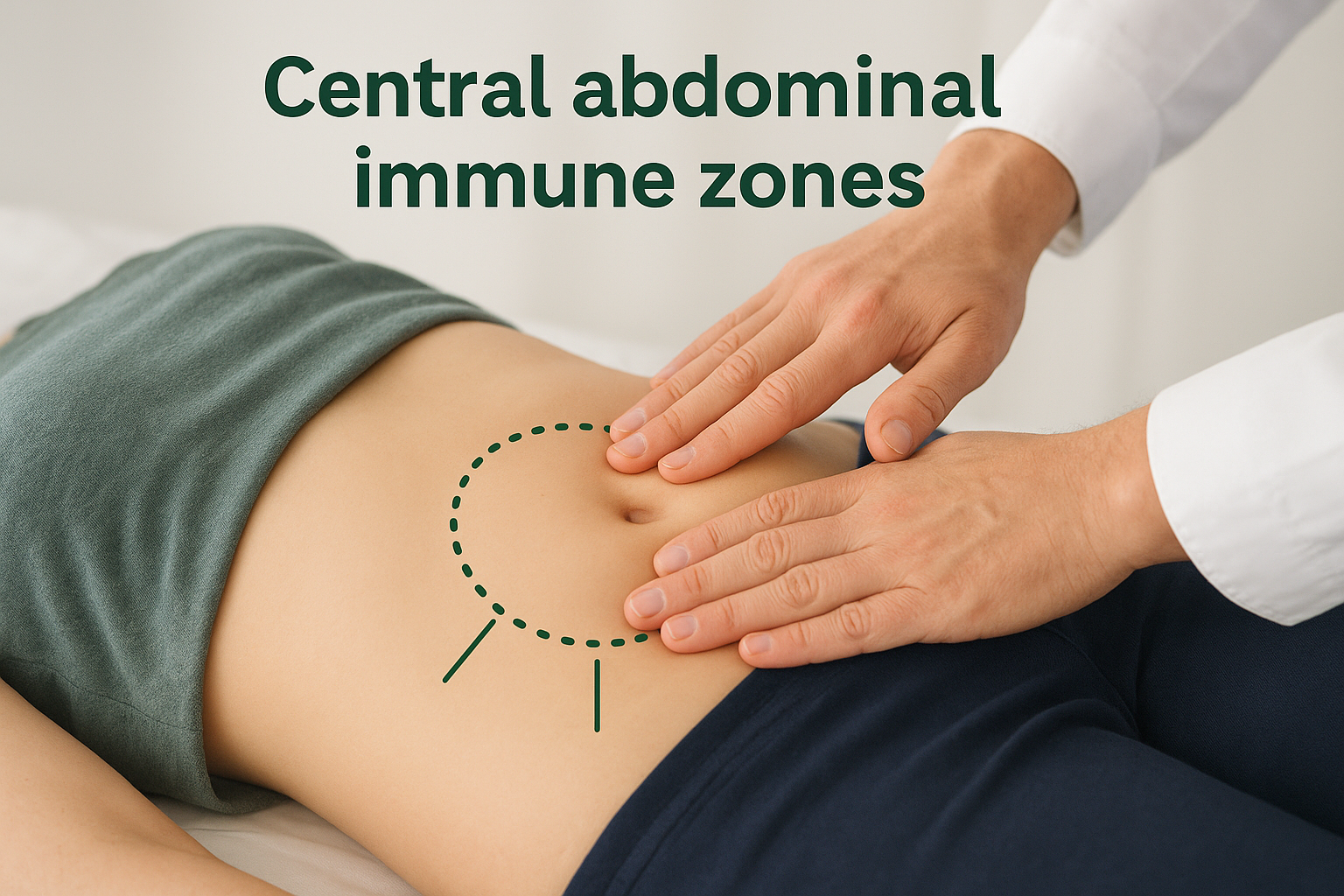
You experience sharp reactive sensitivity when practitioners contact active immune points, often accompanied by referred sensations into your lower abdomen or back. The tissue quality feels either tight and resistant in cases of chronic inflammation or soft and depleted when your immune system lacks the energy to mount proper defensive responses. Temperature differences mark these zones, with cool areas indicating stagnation and hot reactive points revealing active immune battles against pathogens or allergens.
Spleen and lymphatic congestion markers
Your left hypochondriac region beneath the ribs corresponds to spleen function, which filters blood and produces immune cells that patrol your entire system. Tenderness, fullness, or tight resistance in this area reveals spleen overwork from chronic infections, environmental toxins, or autoimmune conditions that demand constant immune surveillance. Practitioners assess both the costal margin and the area extending down toward your left lateral abdomen where lymphatic drainage pathways run.
Chronic sinus infections, recurring respiratory illness, and persistent skin conditions consistently produce palpable spleen zone congestion that clears when underlying immune dysfunction receives proper treatment.
Intestinal lymphatic congestion appears as tender bands or nodular areas along the path of your large intestine, particularly in the ascending and descending colon regions. These findings indicate poor lymphatic drainage that allows toxins and pathogens to accumulate rather than being efficiently removed from your system. Your practitioner traces these pathways systematically, noting where tissue resistance or reactive points cluster.
Immune weakness versus immune hyperactivity
Depleted immune patterns create empty sunken areas in your periumbilical region that lack tissue resilience and feel hollow under palpation pressure. You report feeling tired constantly, catching every illness that circulates, and taking weeks to recover from minor infections. These findings direct treatment toward building immune reserves through tonifying approaches that strengthen your foundational energy.
Autoimmune and allergic conditions produce hot reactive points with tight resistant tissue that indicates your immune system attacking your own tissues or overreacting to harmless substances. Your abdomen shows multiple scattered tender zones corresponding to affected organ systems, whether joints in rheumatoid arthritis, thyroid in Hashimoto’s disease, or intestinal lining in celiac disease or inflammatory bowel conditions.
Assessing sugar imbalance and metabolic stress
Your blood sugar regulation and metabolic function create distinct palpable patterns in your abdomen that reveal diabetes risk, insulin resistance, hypoglycemia, pancreatic stress, and the cascade of metabolic dysfunction that drives weight gain, inflammation, and chronic disease. Practitioners trained in kiiko matsumoto hara diagnosis locate specific zones where pancreatic overwork, liver glycogen depletion, and adrenal compensation produce reactive points, tissue changes, and characteristic tenderness that conventional blood tests might miss until metabolic damage becomes severe. These abdominal findings appear months or years before diabetes diagnosis, giving you the opportunity to reverse dysfunction through targeted treatment and lifestyle changes.
Pancreatic stress and insulin resistance zones
Your pancreatic reflex zone sits in the upper left quadrant of your abdomen, roughly between your ribs and navel on the left side where your pancreas resides anatomically. Practitioners palpate this region for tenderness, tight resistance, or reactive sensitivity that indicates pancreatic overwork from chronic high blood sugar and the constant insulin production required to manage it. You feel sharp discomfort when this zone receives pressure if your pancreas struggles with insulin resistance, pre-diabetes, or established type 2 diabetes.
The tissue quality in pancreatic stress cases often feels dense and congested, with tight bands running horizontally across your upper abdomen. Your practitioner detects temperature differences, finding heat in acute stress states and coolness in depleted exhausted pancreas patterns. The reactive points correspond to how hard your pancreas works to maintain blood sugar control, with severe cases showing intense tenderness that radiates into your back or left shoulder region.
Hypoglycemia versus hyperglycemia patterns
Low blood sugar conditions produce empty weak sensations in your upper central abdomen around CV12 and the epigastric region, where your stomach and spleen work to generate energy from food. Your tissue feels soft and lacks resilience, collapsing under gentle pressure rather than maintaining normal tone. You often experience shakiness, brain fog, irritability, and intense food cravings that temporarily improve after eating, creating a cycle of blood sugar crashes that your abdominal findings reveal.
Chronic sugar imbalances create reactive points in your lower abdomen near CV6 and CV4, indicating kidney and adrenal exhaustion from compensating for unstable blood glucose levels.
High blood sugar patterns show tight reactive zones in your right hypochondriac region where your liver struggles to process excess glucose and convert it to stored glycogen. Your liver area feels full and resistant, sometimes extending down your right lateral abdomen. These findings accompany weight gain, elevated triglycerides, fatty liver disease, and the metabolic syndrome constellation that precedes cardiovascular disease.
Metabolic syndrome abdominal findings
Your entire abdominal palpation reveals systemic metabolic dysfunction through multiple reactive zones that cluster together in characteristic patterns. You show pancreatic stress in your left upper quadrant, liver congestion in your right upper quadrant, kidney exhaustion in your bilateral lower lateral zones, and central abdominal emptiness indicating digestive weakness. This combination identifies metabolic syndrome before standard medical diagnostics confirm the diagnosis.
Treatment addresses these findings through specific point combinations that restore insulin sensitivity, support pancreatic function, and rebuild metabolic reserves. Your abdominal tissue changes measurably as blood sugar stabilizes, with reactive zones softening and empty areas regaining normal fullness. Practitioners track these improvements to verify that treatment protocols effectively reverse your metabolic dysfunction rather than merely managing symptoms.
Using hara diagnosis for needle-free healing
Kiiko matsumoto hara diagnosis translates seamlessly into needle-free treatment protocols that deliver the same clinical outcomes as traditional acupuncture without inserting a single needle into your body. Your practitioner uses the abdominal findings to select precise treatment zones on your body surface, then applies specialized Japanese tools like the teishin (a blunt-tipped probe) or ceramic spoon to stimulate these points through sustained contact, gentle pressure, and specific directional movements. This approach maintains the diagnostic precision of Kiiko Matsumoto’s system while eliminating needle anxiety and creating a deeply relaxing hands-on treatment experience that keeps you comfortable throughout every session.
Selecting treatment points from abdominal findings
Your abdominal reactive zones directly determine which body points receive treatment through a systematic correspondence system that connects hara findings to distal acupuncture locations. When your practitioner finds liver stagnation in your right hypochondriac region, they treat liver meridian points on your feet and legs to resolve the underlying imbalance. Kidney shock points in your lower lateral abdomen guide treatment to kidney meridian points along your inner ankles and lower back that restore depleted reserves and calm hyperactive stress responses.
The beauty of needle-free application lies in continuous real-time palpation that allows your practitioner to feel tissue changes as treatment progresses, adjusting pressure and point selection moment by moment.
Blood stagnation findings in your lower abdomen direct treatment to spleen and liver points that move stuck blood and dissolve painful masses without surgical intervention. Your practitioner rechecks abdominal zones throughout treatment, noting when reactive points soften or disappear as confirmation that the selected treatment strategy addresses your root imbalance effectively.
Applying teishin and ceramic spoon techniques
The teishin probe makes sustained gentle contact with your skin surface at treatment points identified through hara diagnosis, creating energetic stimulation through pressure and subtle circular movements. Your practitioner holds each point for 30 seconds to several minutes, monitoring your pulse and abdominal tissue response to gauge when sufficient stimulation has occurred. This blunt instrument activates the same neurological pathways and meridian responses that needles would trigger, but you experience only comfortable pressure rather than insertion sensation.
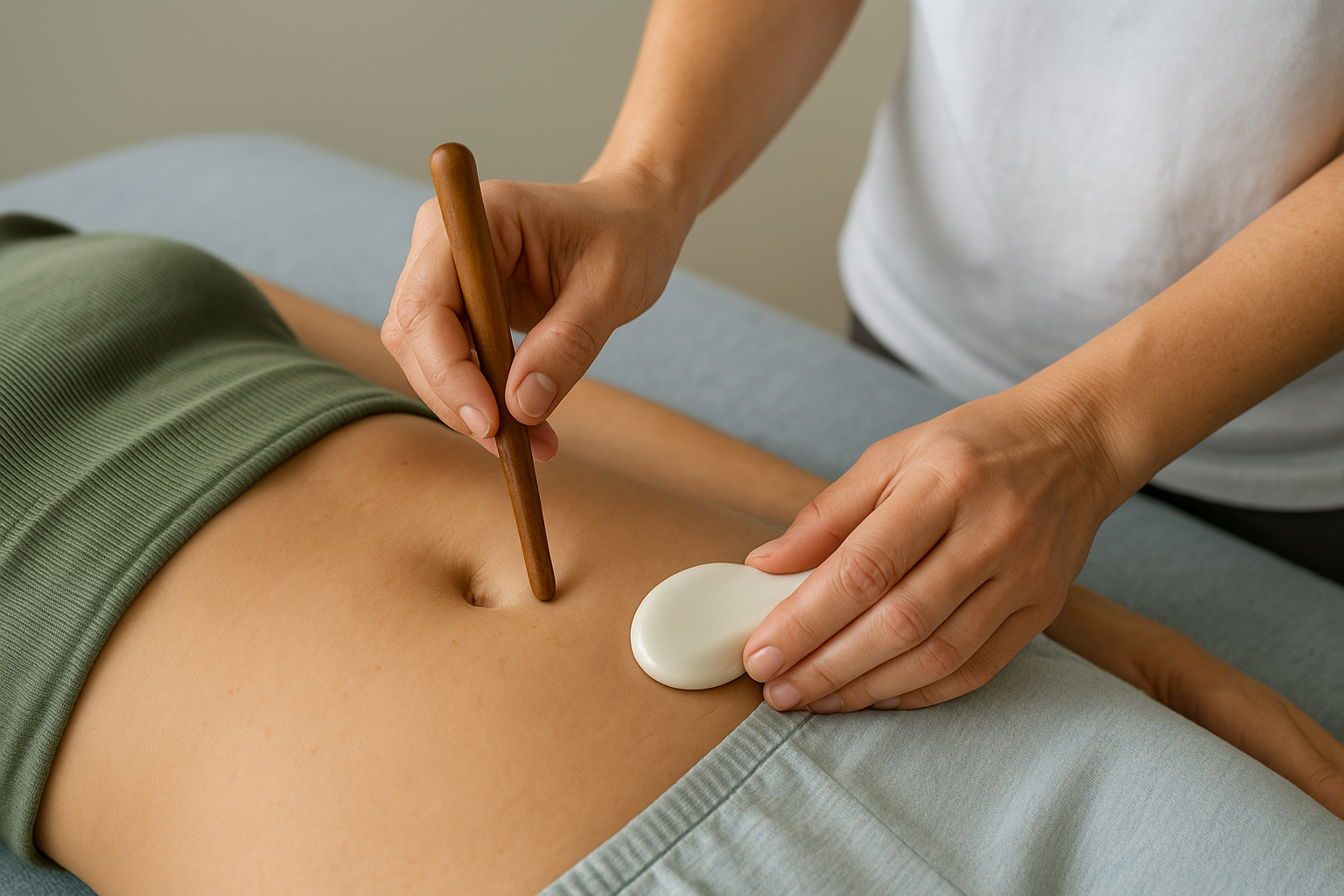
Ceramic spoon therapy addresses deep tissue restrictions and adhesions that abdominal diagnosis reveals, using the smooth rounded edge to reform tight muscles, release fascial restrictions, and restore proper tissue glide. Your practitioner applies controlled pressure along meridian pathways and directly over reactive abdominal zones, breaking up stagnation patterns that manifest as palpable bands or nodules. The warming ceramic material enhances blood flow to treated areas while the mechanical pressure disperses accumulated metabolic waste products.
Tracking treatment progress through repeat palpation
Your practitioner performs abbreviated hara diagnosis at the start of each treatment session to track how your abdominal findings evolve as healing progresses. Reactive zones that were intensely tender during initial evaluation become less sensitive, empty depleted areas regain normal tissue fullness, and new findings might emerge as treatment peels back layers of accumulated dysfunction. This ongoing assessment ensures treatment protocols adapt to your changing needs rather than following rigid predetermined formulas that ignore your body’s feedback signals.
Final thoughts on abdominal diagnosis
Your abdomen holds diagnostic information that reveals health conditions months or years before conventional tests detect them, making kiiko matsumoto hara diagnosis an invaluable assessment tool for preventing disease and addressing root causes. The systematic palpation techniques you’ve learned identify specific tissue changes, reactive zones, and temperature variations that correspond to organ dysfunction, meridian imbalances, and systemic stress patterns throughout your entire body. This hands-on approach creates immediate feedback that guides precise treatment intervention while tracking progress through measurable changes in your abdominal findings.
Mastering abdominal diagnosis requires dedicated practice and refined touch sensitivity, but the clinical insights you gain transform how effectively you address chronic conditions that resist other treatment approaches. Your investment in developing these palpation skills pays dividends through improved patient outcomes and diagnostic confidence. If you’re seeking needle-free acupuncture treatment in San Antonio that incorporates advanced hara diagnosis techniques, Doc Blackstone’s 35+ years of experience with Japanese methods delivers results without traditional needles.