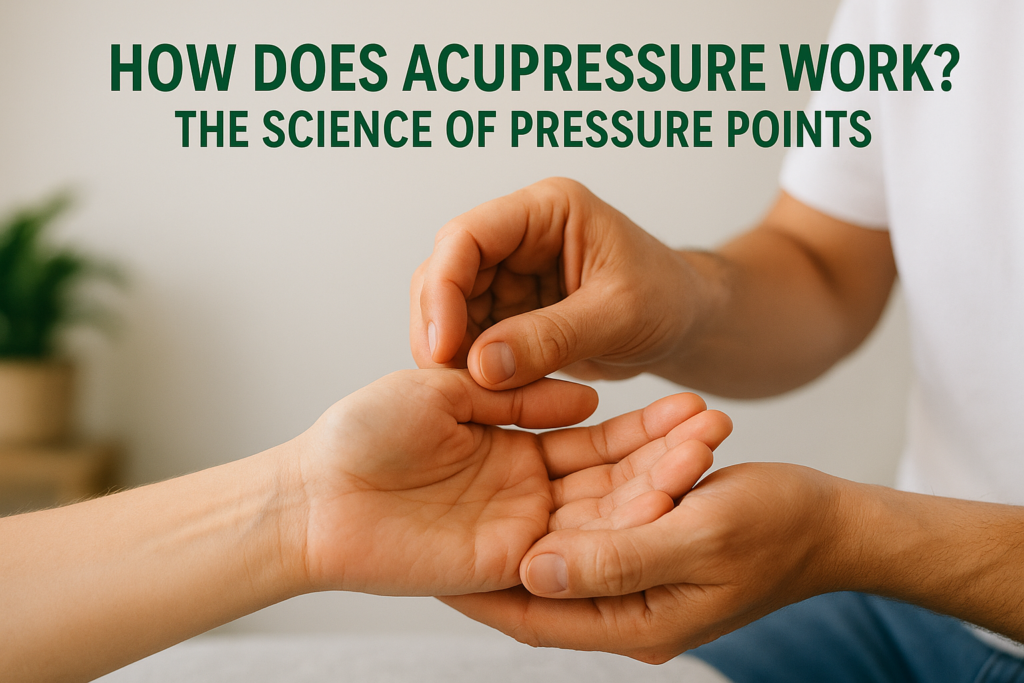
How does acupressure work? It applies targeted pressure to specific points on your body to trigger healing responses. These pressure points connect to energy pathways that influence everything from pain levels to emotional balance. Think of it as acupuncture without needles. You use your fingers or specialized tools to stimulate the same points that practitioners have mapped for thousands of years. Your body responds by releasing natural pain relievers, improving blood flow, and restoring balance to affected areas.
This article breaks down the science behind pressure points and gives you practical knowledge you can use today. You’ll discover why your body responds to acupressure from both traditional Chinese medicine and modern scientific perspectives. We’ll show you exactly how to apply pressure for the best results, reveal the most effective points for pain and stress relief, and compare acupressure to acupuncture so you understand when each works best. You’ll also get essential safety tips for self care practice. Whether you’re managing chronic pain or simply want drug free relief from daily stress, understanding these principles puts powerful healing tools in your hands.
Why the body responds to acupressure
Your body contains an intricate network of response systems that activate when you apply pressure to specific points on your skin. These systems work through both ancient energy pathways and modern physiological mechanisms that scientists can now measure and verify. Understanding how does acupressure work from both perspectives helps you appreciate why this simple touch therapy produces real, measurable results. Traditional Chinese medicine practitioners mapped these responses over thousands of years through careful observation, while contemporary research now validates their findings with clinical evidence.
The traditional energy pathway explanation
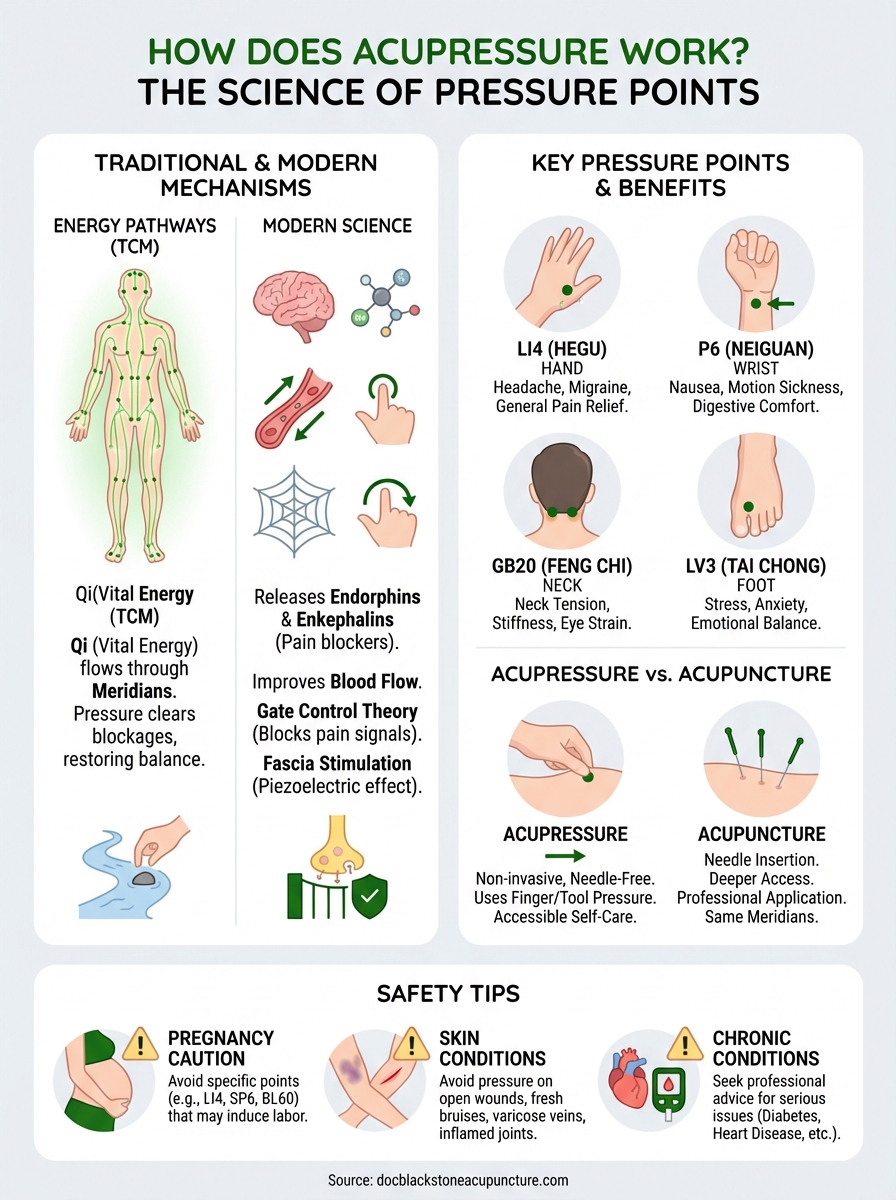
According to Traditional Chinese Medicine, your body contains twelve major meridians that function like rivers carrying vital energy called Qi (pronounced "chee"). These invisible channels connect your internal organs to specific points on your skin’s surface. When you apply pressure to these acupressure points, you remove blockages that restrict Qi flow, similar to clearing debris from a stream. This restored flow allows your body to heal itself by bringing balance back to the affected organ systems. Your meridian network also connects to emotional states, which explains why stimulating certain points can relieve both physical pain and mental stress simultaneously.
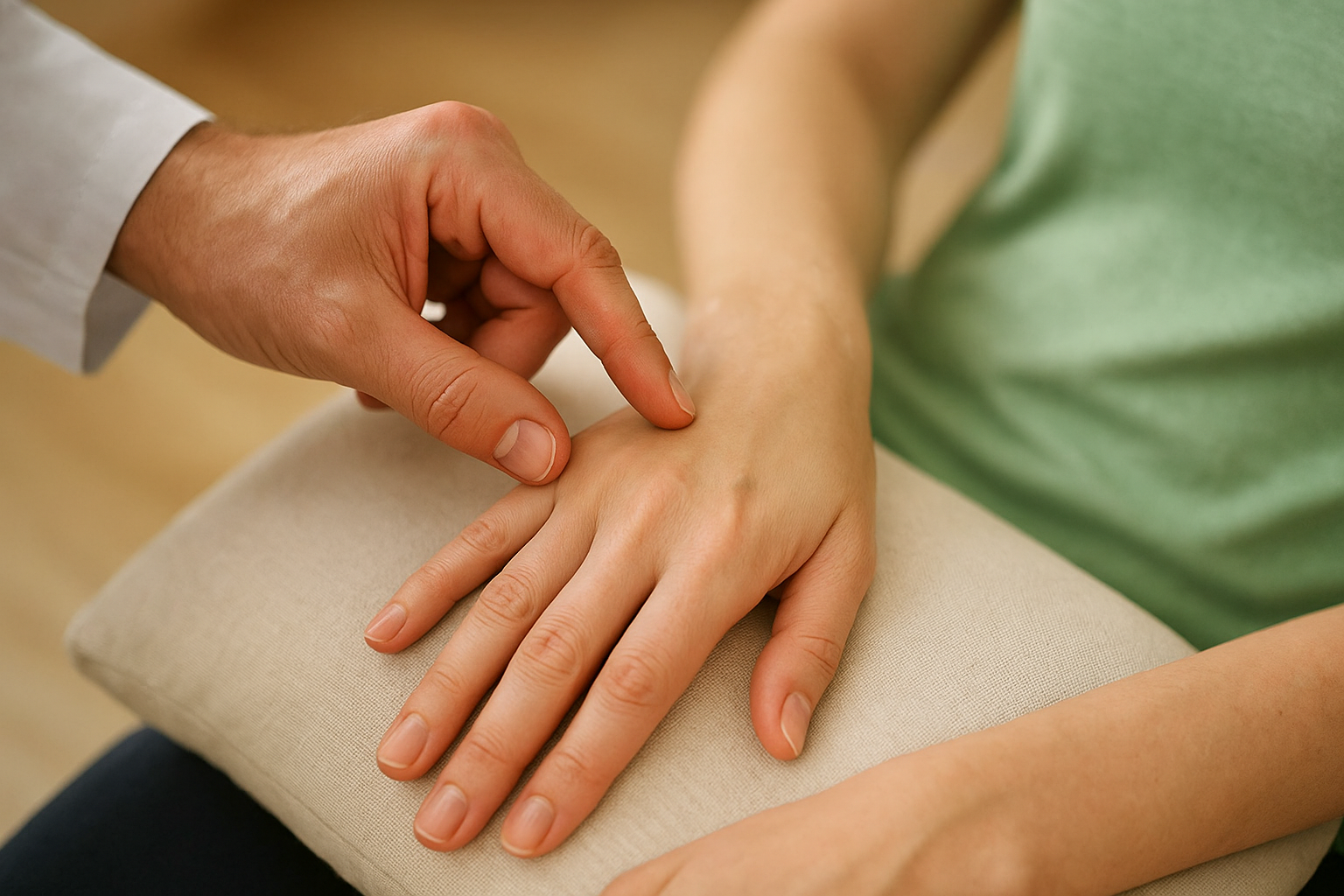
Pressure on meridian points creates a ripple effect that travels through your entire energy system, addressing problems far from where you actually touch.
The modern scientific mechanisms
Western medicine explains acupressure through measurable physiological changes in your nervous system and tissue structure. When you press acupressure points, your body releases endorphins and enkephalins, which are natural chemicals that block pain signals and create feelings of well-being. The pressure also triggers improved blood circulation to the area, delivering fresh oxygen and nutrients while removing metabolic waste products. According to the gate control theory of pain, stimulating pressure points sends competing signals through your nervous system that essentially close the "gate" on pain messages trying to reach your brain.
Pressure application directly affects your fascia, the connective tissue web that surrounds every muscle, organ, and structure in your body. This fascial network contains numerous nerve endings that respond to mechanical stimulation. When you apply sustained pressure, you create piezoelectric effects in your fascia that generate tiny electrical signals, promoting tissue repair and reducing inflammation. Your autonomic nervous system shifts from its stressed "fight or flight" state into the relaxed "rest and digest" mode when specific points receive proper stimulation.
This dual perspective validates acupressure for different types of patients. Those who connect with Eastern philosophy appreciate the meridian framework, while science-minded individuals find comfort in documented neurological and biochemical responses. Both explanations describe the same healing phenomenon from different angles, giving you multiple ways to understand why this ancient practice continues to deliver results in modern settings.
How to apply pressure for best results
Applying pressure correctly transforms acupressure from random touching into a precise healing technique. Your success depends on using the right amount of force, proper hand positioning, and consistent technique. When you master these fundamentals, you gain access to the same therapeutic benefits that practitioners deliver in clinical settings. The difference between effective and ineffective acupressure often comes down to these technical details rather than which points you choose.
Basic pressure techniques
You can apply pressure using three primary methods that each serve different purposes. Steady pressing involves placing your thumb or finger on the point and gradually increasing pressure until you reach the desired depth, then holding it there. This technique works best for releasing deep tension and stimulating stubborn blockages. Kneading uses small circular motions with your fingertip or knuckle to warm the area and gently stimulate the point, which proves ideal for sensitive spots or when you’re new to acupressure. Circular motions combine pressure with movement, rotating clockwise or counterclockwise while maintaining contact with the skin to engage both surface and deeper tissue layers.
Professional tools and specialized methods
While your fingers and thumbs handle most self-care applications, professional practitioners access deeper tissue using specialized non-invasive tools. These rounded instruments provide leverage and precision that fingers cannot match. Doc Blackstone’s ceramic spoon technique exemplifies this advanced approach, applying therapeutic pressure without needle penetration to reform muscle and tendon structures. This professional method demonstrates how does acupressure work at its highest level, achieving surgical prevention outcomes through skilled tool application.
Duration and sensation guidelines
Hold each point for 30 seconds to 2 minutes while breathing deeply and steadily. Your breath carries oxygen to the area and helps your nervous system accept the pressure signals. The sensation should feel like a "good hurt" that creates a dull, spreading ache rather than sharp or stabbing pain. If you experience intense discomfort, reduce your pressure slightly. Your body communicates clearly when you’ve found the right depth.
Proper pressure creates therapeutic discomfort that dissolves into relief, not pain that makes you tense up.
Key points for pain and stress relief
Your body contains hundreds of accessible pressure points, but four specific locations deliver the most reliable results for common complaints. These points have earned their reputation through thousands of years of clinical use and modern research validation. Understanding how does acupressure work means knowing exactly where to press and what benefits each point provides. You can find these points on yourself without special training, making them perfect for self-care practice between professional sessions.
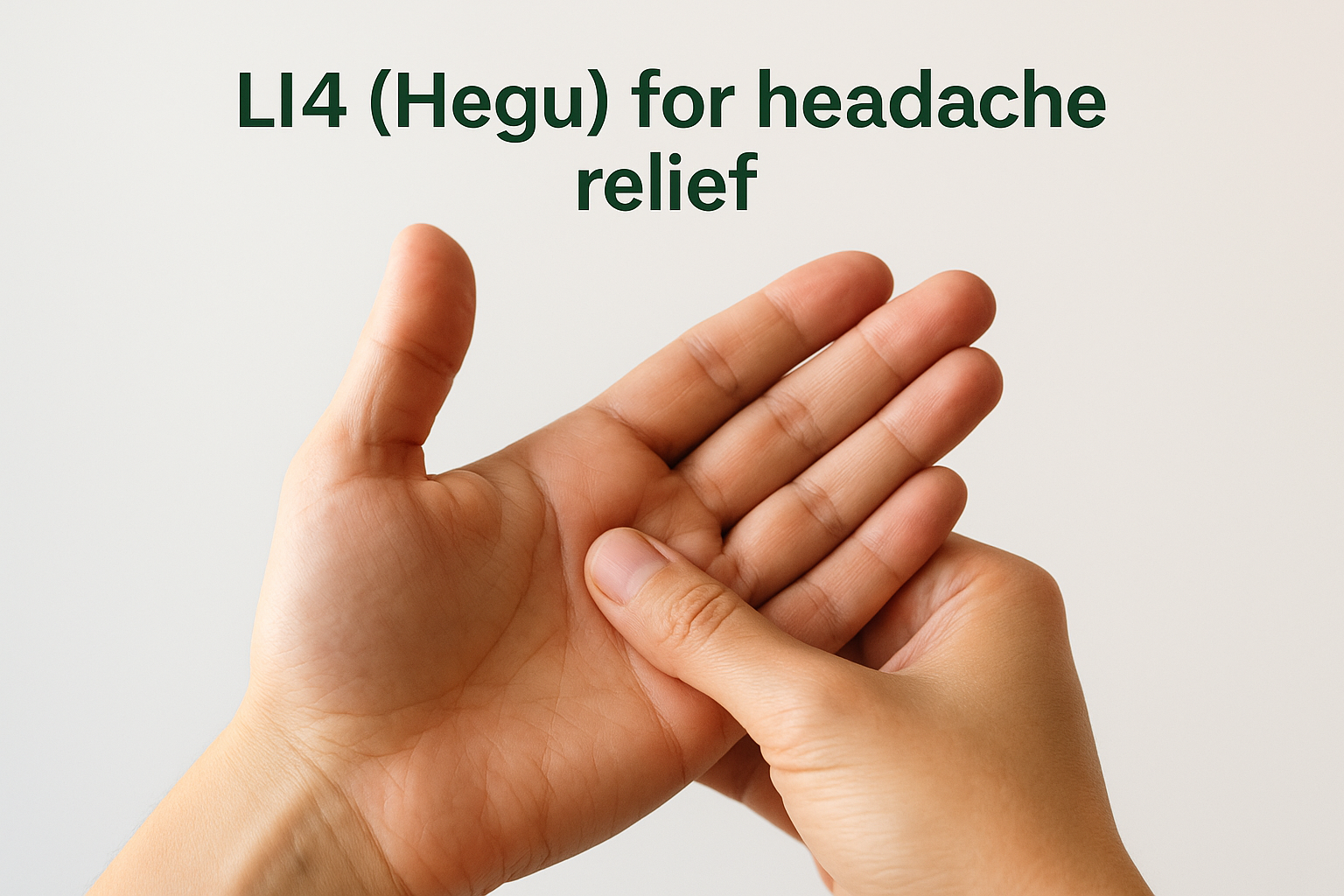
LI4 (Hegu) for headache relief
Located in the webbing between your thumb and index finger, LI4 stands as the most versatile pain point in acupressure therapy. You find it by pinching the web with your opposite thumb and feeling for the tender spot in the muscle. This point releases tension headaches, migraines, and general pain throughout your body because it connects to pain processing pathways in your nervous system. Press firmly for one to two minutes while breathing deeply to feel the relief spread from your hand into your head and neck.
P6 (Neiguan) for digestive comfort
Measure three finger widths down from your wrist crease on the inner forearm, centered between the two visible tendons. P6 provides immediate relief from nausea, motion sickness, and morning sickness in pregnant individuals. Airlines and cruise ships have validated this point’s effectiveness, which explains why acupressure wristbands target this exact location.
GB20 (Feng Chi) for neck tension
Feel the base of your skull where it meets your neck muscles, then slide your fingers into the hollow spaces on either side of your spine. GB20 melts away neck stiffness, tension headaches, and eye strain from computer work. This point responds especially well to sustained pressure using your thumbs while tilting your head slightly backward.
Stimulating GB20 creates an almost immediate sensation of tension draining from your entire head and upper back.
LV3 (Tai Chong) for emotional balance
Find this point on your foot’s top surface, in the valley where your big toe and second toe bones meet. LV3 addresses stress, anxiety, insomnia, and irritability by calming your nervous system and regulating emotional responses. Press downward between the bones while sitting comfortably to access this powerful mood stabilizer.
Comparing acupressure and acupuncture
Both modalities share the same meridian map and target identical points on your body, but they achieve results through fundamentally different methods. Understanding how does acupressure work compared to acupuncture helps you choose the approach that matches your comfort level and healing goals. The techniques diverge at application, yet both trigger your body’s healing mechanisms by stimulating specific points along energy pathways. Your choice between them often depends more on personal preference and accessibility than on effectiveness.
The core difference in application
Acupuncture inserts fine needles through your skin to reach specific depths beneath the surface, creating a direct channel to meridian points. Acupressure uses sustained finger or tool pressure on your skin’s surface to achieve similar stimulation without penetration. Both methods activate the same points and meridians, but acupressure relies on mechanical pressure rather than needle insertion to generate therapeutic responses. Your body receives the healing signal through different sensory pathways, though the destination point remains identical.
Why people choose acupressure
Many individuals select acupressure because needle phobia prevents them from trying traditional acupuncture despite wanting the benefits. Others have skin sensitivity, bleeding disorders, or immune concerns that make needle insertion risky or uncomfortable. Touch therapy appeals to people who prefer feeling the practitioner’s hands actively working on their body rather than lying still with needles in place. You maintain complete control during acupressure sessions because nothing breaks your skin barrier.
Acupressure delivers the same meridian stimulation that acupuncture provides, just through surface pressure instead of insertion.
Professional needle-free techniques
Advanced practitioners bridge the gap between basic acupressure and traditional acupuncture using specialized non-invasive tools that access deeper tissue layers. Doc Blackstone’s approach demonstrates this evolution, delivering professional-grade results without skin penetration through refined techniques like the ceramic spoon method. These advanced applications surpass what you can achieve through self-care while maintaining the needle-free advantage. Acupressure also serves as excellent self-care practice between professional treatments, letting you extend therapeutic benefits at home using the same points your practitioner targets during sessions.
Safety tips for self-care practice
Understanding how does acupressure work includes knowing when to pause or modify your practice to avoid unwanted effects. While acupressure ranks among the safest healing modalities, certain situations require extra caution or complete avoidance of specific points. Your body sends clear signals when something doesn’t feel right, and honoring those warnings prevents complications. Self-care works best when you combine enthusiasm with informed judgment about your unique circumstances.
When to avoid certain pressure points
Pregnant individuals must avoid specific points that traditional medicine has identified as labor-inducing locations. Points like LI4, SP6, and BL60 can stimulate uterine contractions when you apply sustained pressure. Skip these areas entirely during pregnancy unless you’re past your due date and working with a qualified practitioner who specializes in labor preparation. Your growing baby depends on you recognizing these contraindications before applying pressure.
Contraindications for specific conditions
Never apply pressure directly over open wounds, fresh bruises, or varicose veins where compromised tissue cannot handle additional stress. These areas need healing time before they can safely receive therapeutic pressure. Skip pressure points over inflamed joints during acute flare-ups of conditions like rheumatoid arthritis, as stimulation can worsen inflammation. Your skin provides visual feedback about which areas to avoid.
Acupressure enhances healing when you apply it to healthy tissue, not when you force it onto damaged areas that need rest.
Recognizing when professional help is needed
Chronic conditions like diabetes, heart disease, or autoimmune disorders require professional assessment before you rely solely on self-treatment. While acupressure supports your overall wellness, serious health issues need qualified diagnosis and comprehensive treatment plans that integrate multiple therapies. Consider self-care as a complement to professional guidance rather than a replacement for medical attention when dealing with persistent or worsening symptoms.
Taking the next step in holistic health
Understanding how does acupressure work gives you foundational knowledge for self-care, but experiencing professional needle-free acupuncture reveals the technique’s full potential. The pressure you apply at home provides temporary relief, while skilled practitioners access deeper tissue layers using specialized tools that prevent surgeries and resolve chronic conditions. Your fingers deliver general wellness support, but trained hands combined with refined instruments create lasting structural changes in muscle, fascia, and tendon that self-care cannot match.
Professional treatment transforms occasional symptom management into comprehensive healing protocols tailored to your specific condition. Doc Blackstone’s Sacred Healing Tree system integrates needle-free acupuncture with structural alignment, emotional release therapy, and Medical Qigong to address root causes rather than surface symptoms. Discover how needle-free acupuncture in San Antonio delivers surgical prevention outcomes and resolves conditions that haven’t responded to conventional treatments. Your journey from self-care exploration to professional healing starts with a single session.