

Myofascial release is a hands-on therapy that applies gentle pressure to release tension in your fascia. Your fascia is the connective tissue web that wraps around every muscle, bone, nerve, and organ in your body. When this tissue becomes tight or restricted from injury, inflammation, or repetitive stress, it can cause pain and limited movement. The myofascial release definition centers on using sustained pressure and stretching techniques to restore flexibility and eliminate trigger points in these tissues.
This article explains how myofascial release works, what conditions it treats, and what research says about its effectiveness. You’ll learn the difference between professional treatment and self-care techniques, understand the benefits and limitations, and discover when this therapy might help your specific situation. We’ll also cover safety considerations and potential risks so you can make an informed decision about whether myofascial release fits your health goals. By the end, you’ll have a complete picture of this therapy and how it compares to other manual treatment approaches.
Why myofascial release matters
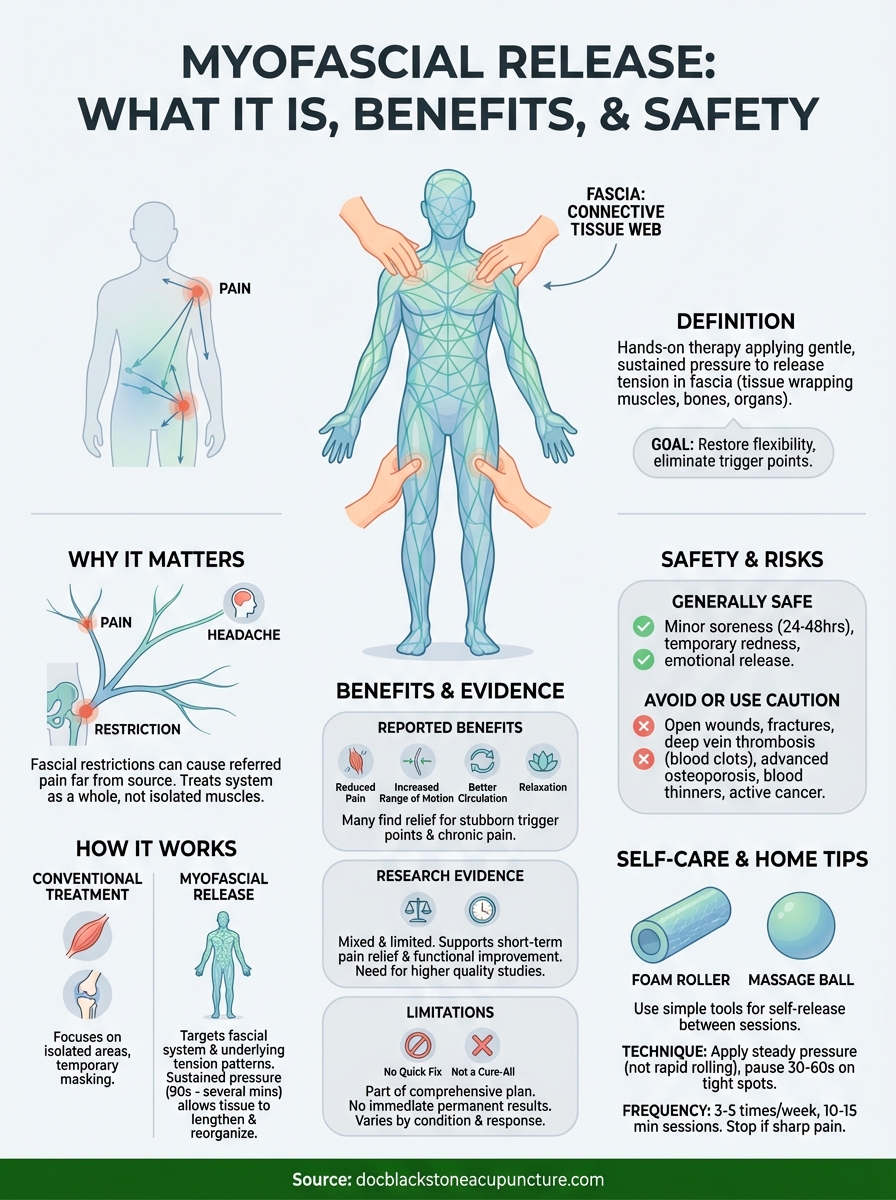
Your fascia connects every part of your body in one continuous structure. When trauma, surgery, or chronic inflammation creates restrictions in one area, the tension can pull on distant tissues and cause pain far from the original problem. This explains why you might feel knee pain from a hip restriction or headaches from shoulder tightness. Traditional treatments often address symptoms where you feel pain, but myofascial release targets the actual source within your fascial network.

The gap in conventional treatment
Most standard therapies focus on isolated muscles or joints. Physical therapy might strengthen specific areas, while medication temporarily masks pain. Myofascial release definition emphasizes treating the fascial system as a whole, addressing restrictions that other approaches miss. You might have tried multiple treatments without lasting relief because they never addressed the fascial restrictions creating your symptoms. This therapy fills that gap by releasing underlying tension patterns that conventional methods cannot reach.
When fascia stays restricted, your body compensates with poor movement patterns that create new problems over time.
How to use myofascial release in treatment
Your practitioner locates fascial restrictions by feeling for areas where your tissue lacks the normal sliding and gliding motion. They apply gentle, sustained pressure directly on your skin without oils or lotions because they need to detect subtle changes in tissue texture. The pressure typically starts light and gradually increases as your fascia releases, which can take anywhere from 90 seconds to several minutes per area. This hands-on approach differs from other therapies because your practitioner continuously adjusts their technique based on what they feel happening in your tissues.
What practitioners do during sessions
Treatment begins with a postural assessment to identify areas of restriction and compensation patterns throughout your body. Your therapist applies sustained pressure to trigger points and tight fascial areas, holding each position until they feel the tissue soften and release. During the session, you might experience sensations ranging from mild discomfort to significant pressure, though most people find it tolerable and even relaxing once the initial release occurs.

The key to effective treatment is sustained pressure that allows your fascia to slowly lengthen and reorganize.
Professional sessions address multiple interconnected areas rather than just where you feel pain. Your practitioner may work on your hip to resolve shoulder problems or release your jaw to help chronic headaches, following the fascial connections that standard myofascial release definition emphasizes.
Duration and frequency recommendations
Each treatment session lasts between 15 to 50 minutes depending on your condition’s complexity and the areas requiring attention. Most practitioners recommend two to three sessions per week initially for chronic conditions, then reduce frequency as your symptoms improve. You should expect several weeks or months of consistent treatment for lasting results with stubborn restrictions, with outcomes varying based on how long you’ve had the problem.
Benefits, evidence, and limits of myofascial release
People who receive myofascial release often report reduced pain intensity, increased range of motion, and improved flexibility in areas that felt stiff or restricted. The therapy may help with conditions like chronic low back pain, fibromyalgia, temporomandibular joint disorder, and myofascial pain syndrome. You might experience better circulation as restrictions release, along with a sense of relaxation that helps reduce overall stress levels. Many patients find relief when other treatments have failed, particularly for stubborn trigger points that respond poorly to conventional approaches.

What research shows about effectiveness
The evidence base for myofascial release remains mixed and somewhat limited compared to other manual therapies. A 2015 systematic review found that myofascial release can provide short-term pain relief and functional improvements for certain conditions, though researchers noted the need for higher quality studies. Studies on low back pain show modest positive effects, while research on fibromyalgia suggests potential benefits for pain and quality of life. The challenge is that myofascial release techniques vary widely between practitioners, making it difficult to standardize research protocols and compare results.
Research supports some benefits, but the evidence quality varies significantly across different conditions and study designs.
The myofascial release definition and application methods differ between schools of thought, which complicates research efforts. Some studies show improvements that could stem from the therapeutic relationship or placebo effect rather than the specific fascial manipulation techniques themselves.
Real limitations you should understand
Myofascial release works best as part of a comprehensive treatment plan rather than a standalone cure. You should not expect immediate permanent results from a single session, especially for chronic conditions that developed over months or years. The therapy cannot reverse structural damage like advanced arthritis, repair torn ligaments, or heal fractured bones. Insurance coverage remains inconsistent, and the technique requires skilled practitioners who can accurately detect and release fascial restrictions. Results vary significantly based on your specific condition, how long you’ve had symptoms, and your body’s individual response to treatment.
Safety, risks, and when to avoid treatment
Myofascial release carries relatively low risk when performed by trained practitioners. You should expect minor soreness similar to post-workout muscle tenderness that typically fades within 24 to 48 hours. Some people experience temporary skin redness where pressure was applied, light bruising if you have sensitive skin, or emotional releases as stored tension leaves your body. These reactions indicate your tissues responding to treatment rather than signs of harm, though you should always communicate discomfort levels with your practitioner during sessions.
Potential side effects
The most common side effect is temporary muscle soreness that resolves on its own within a day or two. You might feel fatigue immediately after treatment as your body processes the fascial changes, which is why practitioners often recommend drinking extra water and avoiding strenuous activity for the rest of the day. Rare but possible complications include nerve damage if excessive pressure is applied incorrectly, internal bleeding in people with clotting disorders, or brief paralysis in extremely rare cases involving improper technique.
Always inform your practitioner about all medications and health conditions before starting treatment to minimize risks.
When you should avoid treatment
You should not receive myofascial release if you have open wounds, burns, or recent bone fractures in the treatment area. Deep vein thrombosis poses significant risk because manual pressure could dislodge blood clots. People taking blood thinners need medical clearance before treatment due to increased bleeding risk. Advanced osteoporosis, active cancer in treatment areas, and severe metabolic conditions also warrant caution or complete avoidance, as the myofascial release definition emphasizes sustained pressure that could cause complications in these situations.
Self myofascial release and home care tips
You can perform myofascial release on yourself between professional sessions using simple tools like foam rollers, massage balls, or specialized devices. Self-treatment extends the benefits of professional care and helps maintain fascial flexibility as restrictions improve. The techniques differ from professional myofascial release definition because you apply pressure yourself, which means you control intensity and can stop immediately if something feels wrong. Most people find self-treatment particularly effective for maintaining gains after completing a series of professional sessions.
Tools and basic techniques
Foam rollers work best for large muscle groups like your back, thighs, and calves by allowing you to use body weight for consistent pressure. Tennis balls or lacrosse balls target smaller trigger points in areas like your feet, shoulders, and hips where precision matters more than broad coverage. You should roll slowly over each area, pausing 30 to 60 seconds on spots that feel particularly tight or tender.

Apply steady pressure rather than rapid rolling motions to allow your fascia time to release and reorganize.
When and how often to practice
Practice self-myofascial release three to five times per week for preventative care or daily if you’re actively addressing restrictions. Sessions should last 10 to 15 minutes, focusing on areas your practitioner identified during treatment. Stop immediately if you feel sharp pain, numbness, or tingling that doesn’t resolve within seconds.
Moving forward
The myofascial release definition clarifies how this therapy addresses fascial restrictions that create pain and limit movement throughout your body. You now understand the difference between professional treatment and self-care techniques, along with what research supports and where evidence remains limited. This knowledge helps you make informed decisions about whether myofascial release fits your specific health situation and what realistic expectations you should hold for results.
Your next step depends on your current symptoms and treatment history. If you’re dealing with chronic pain or restrictions that haven’t responded to conventional approaches, consider exploring alternative therapies that work with your body’s natural healing systems. Doc Blackstone Acupuncture offers needle-free acupuncture and complementary bodywork techniques that address fascial restrictions and pain patterns without the use of traditional needles.